
Volume represents the total amount of a cryptocurrency traded over a specific period. For traders, it’s one of the most revealing metrics available—showing not just how much activity is happening, but whether that activity carries conviction or represents empty noise.
When Bitcoin surges 8% on 200,000 BTC in volume versus the same move on 40,000 BTC, you’re looking at fundamentally different market conditions. The first scenario suggests broad participation and sustainable momentum. The second raises red flags about thin liquidity and potential whipsaw reversals.
Understanding volume transforms how you read charts, time entries, and assess risk. Without it, you’re trading blind—reacting to price movements without knowing whether the market agrees with them.
Understanding Crypto Trading Volume Basics
Trading volume cryptocurrency explained starts with a simple concept: every completed trade involves both a buyer and seller exchanging assets. Volume counts the total amount of cryptocurrency that changed hands, typically measured in the asset itself (BTC, ETH) or its USD equivalent.
Unlike traditional markets with centralized reporting, crypto volume comes from hundreds of exchanges operating independently. A Bitcoin trade on Coinbase and another on Binance both contribute to the global volume picture, but they’re recorded separately. Aggregators like CoinMarketCap and CoinGecko compile this data, though accuracy varies significantly.
The crypto volume meaning extends beyond simple transaction counts. It measures market participation intensity. When Ethereum processes $15 billion in 24-hour volume during a major upgrade announcement versus $8 billion on a quiet Tuesday, that difference tells you how much capital is actively positioning around the event.

How Volume Is Calculated in Cryptocurrency Markets
Exchanges calculate volume by summing the size of all executed trades within a timeframe. If ten traders each buy 1 BTC at $45,000, that’s 10 BTC in volume or $450,000 in notional value.
Most platforms report 24-hour rolling volume—constantly updated as old trades drop off and new ones add in. This creates a moving window that refreshes continuously rather than resetting at midnight. Some exchanges also provide volume bars on different timeframes: 1-hour, 4-hour, daily, weekly.
Spot volume counts actual cryptocurrency changing hands. Derivatives volume—futures, perpetual swaps, options—represents contract exposure, which can dwarf spot markets. A single Bitcoin futures contract might control 1 BTC worth of exposure, but the actual BTC doesn’t move between parties. This distinction matters because derivatives volume reflects leverage and speculation more than direct asset demand.
Volume calculations face manipulation risks. Wash trading—where the same entity trades with itself to inflate numbers—plagued crypto markets for years. By 2026, regulatory pressure and improved detection algorithms reduced but didn’t eliminate this practice. Checking multiple data sources and favoring exchanges with surveillance programs helps filter noise.
The Difference Between Exchange Volume and On-Chain Volume
On-chain volume vs exchange volume represents a critical split in how crypto activity gets measured.
Exchange volume tracks trades happening on centralized platforms like Coinbase, Kraken, or Binance. These transactions occur in the exchange’s internal ledger—no blockchain recording happens until someone withdraws. If you buy ETH on Binance and sell it three hours later on the same platform, both trades add to exchange volume but produce zero on-chain footprint.
On-chain volume measures actual blockchain transactions: transfers between wallets, DeFi swaps, smart contract interactions. Every movement gets permanently recorded. When you swap USDC for ETH on Uniswap, that transaction appears in Ethereum’s on-chain data.
Neither metric is universally superior. Exchange volume shows active trading interest and price discovery. On-chain volume reveals actual network usage, self-custody movements, and DeFi activity. Large on-chain volume with low exchange volume might indicate accumulation—holders moving assets to cold storage. High exchange volume with minimal on-chain activity suggests speculative trading without conviction moves to self-custody.
Bitcoin’s on-chain volume typically runs lower than exchange volume because most BTC trading happens on centralized platforms. Ethereum shows more balance due to extensive DeFi activity generating constant on-chain swaps and transfers.
How Volume and Price Movements Work Together
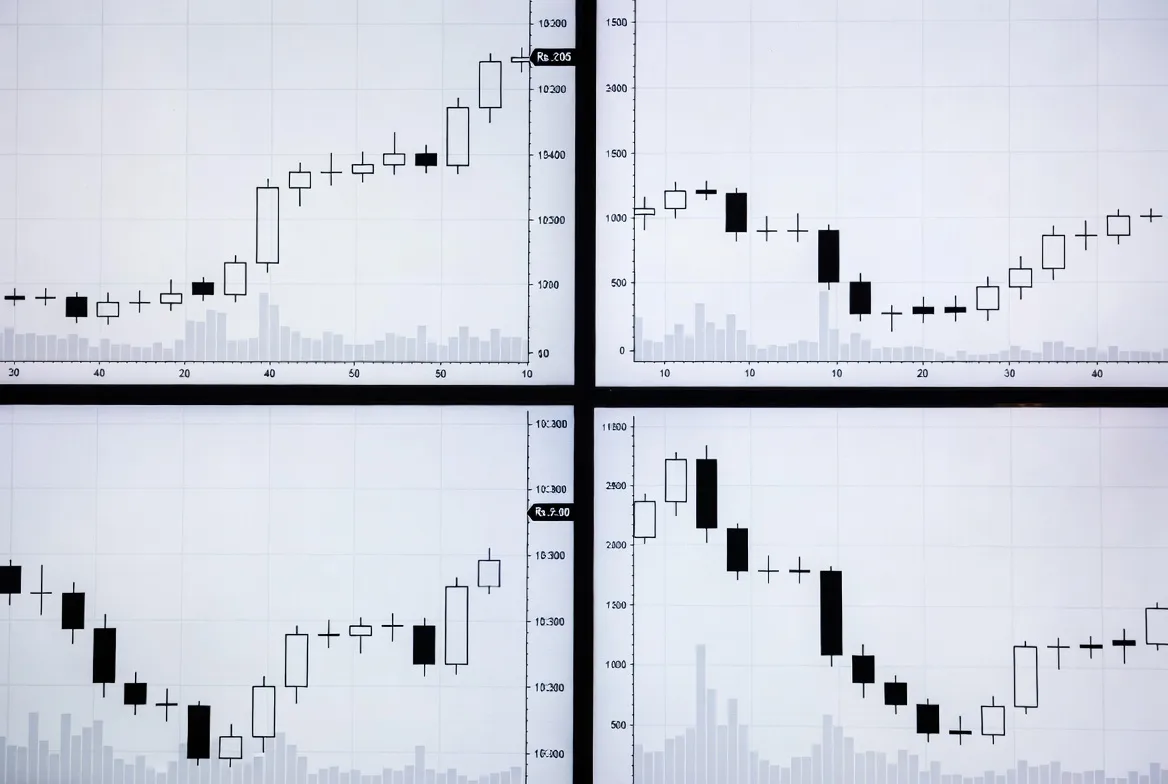
The volume and price relationship crypto traders rely on follows predictable patterns that separate sustainable trends from false moves.
Rising prices on increasing volume signal healthy bullish momentum. Each new high attracts more participants, confirming the move’s strength. When Solana climbs from $100 to $140 while daily volume doubles, the market is validating the rally with capital commitment.
Rising prices on declining volume flash warning signs. Fewer participants are pushing prices higher, suggesting exhaustion. The move lacks broad support. This divergence often precedes reversals—price makes new highs but volume peaks earlier, showing diminishing enthusiasm.
Falling prices on high volume indicate strong selling pressure and conviction behind the downtrend. If Cardano drops 15% on three times average volume, sellers are aggressively exiting positions. This typically continues until volume exhaustion signals capitulation.
Falling prices on low volume suggest weak selling without panic. The decline might be temporary profit-taking or boredom rather than fundamental rejection. These often reverse quickly once buyers recognize the opportunity.
Volume confirms breakouts. When a cryptocurrency trades in a tight range for weeks then breaks resistance, volume should spike significantly. A breakout on thin volume frequently fails—price returns to the range because insufficient demand exists to sustain new levels. Conversely, a resistance break on 300% normal volume carries much higher success probability.
Volume also reveals accumulation and distribution phases. During consolidation, watch for volume patterns. Consistent volume on down days with lighter volume on up days suggests distribution—large holders selling into strength. The opposite pattern—heavy volume on up days, light volume on pullbacks—indicates accumulation by informed players.
Reading Volume Signals in Crypto Markets
Volume patterns provide context that transforms how you interpret price action. Recognizing what different volume levels signal helps you position ahead of major moves or avoid traps.
What High Volume Tells You About Market Activity
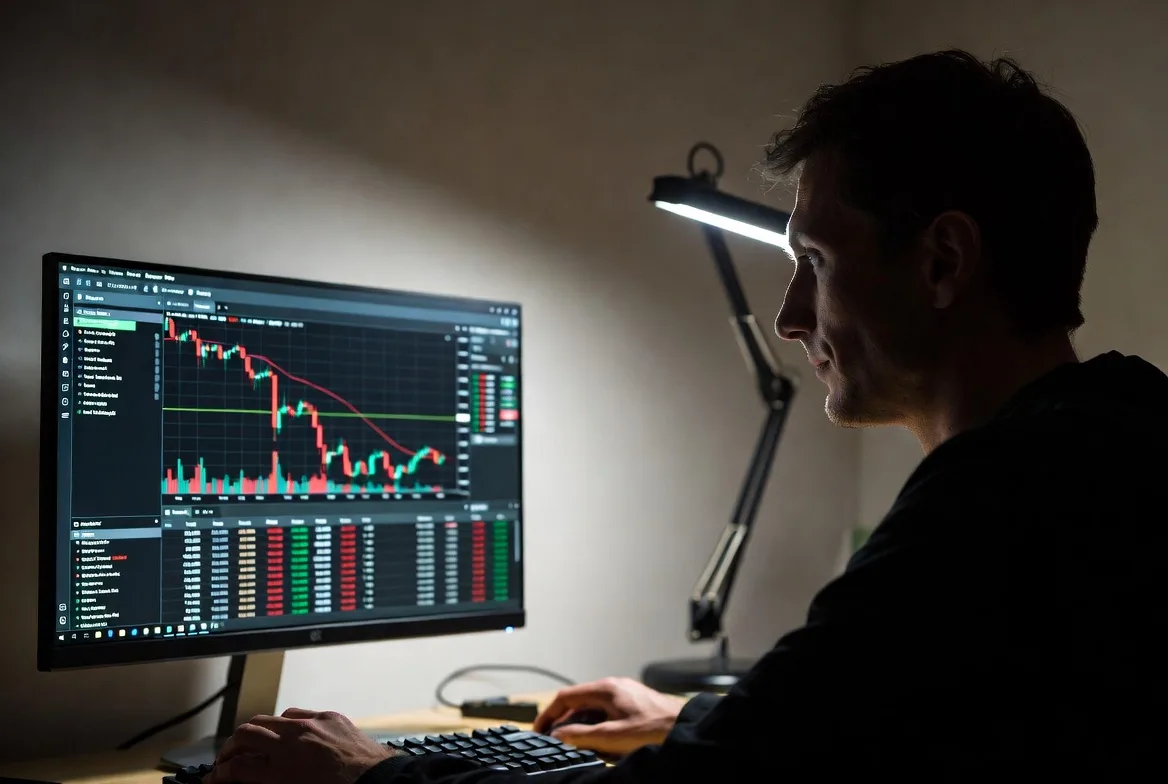
High volume crypto signals represent increased market participation and conviction. When daily volume jumps 200-400% above the 30-day average, something significant is happening.
Breakout confirmation ranks among the most reliable high-volume signals. A cryptocurrency consolidating between $2.50-$3.00 for six weeks then breaking to $3.20 on five times normal volume shows genuine interest. Traders who waited for confirmation now have evidence that the range break isn’t a head-fake.
Volume spikes during news events reveal market interpretation. If a Layer-2 protocol announces a major partnership and volume surges 500% while price climbs 12%, the market views the news positively. Same news with volume spike but price dropping 8% shows negative reception despite initial attention.
Climax volume often marks trend exhaustion. After a sustained rally, an explosive volume day that dwarfs recent activity—perhaps 10x the average—frequently signals a top. Everyone who wanted in has bought. Similarly, panic selling that produces historic volume readings often marks bottoms as the last weak hands capitulate.
The 24 hour crypto volume metric provides the standard measurement for comparing activity levels. Most platforms default to this timeframe. However, context matters—$500 million in 24-hour volume means something very different for Bitcoin versus a mid-cap altcoin. Compare current volume to the asset’s own historical average rather than absolute numbers.
Low Volume Warning Signs and Trading Risks
Low volume crypto risks center on liquidity and price reliability. When participation drops, markets become vulnerable to manipulation and erratic price swings.
Thin orderbooks accompanying low volume mean small trades cause outsized price movements. A $50,000 market buy might move a high-volume cryptocurrency 0.3% but could spike a low-volume altcoin 8%. This volatility works both directions—equally dramatic drops occur on modest selling.
Low volume breakouts fail more often than succeed. When price breaks a key level on 40% below-average volume, skepticism is warranted. The move likely lacks broad support and will reverse once early movers take profits.
Reduced volume during trends suggests weakening momentum. If a downtrend that started on heavy volume sees declining participation over subsequent weeks, sellers are losing conviction. This often precedes reversals as the path of least resistance shifts.
Weekend and holiday volume typically drops 30-50% in crypto markets, though 24/7 trading means less pronounced effects than traditional markets. Be cautious taking positions during these periods—Monday morning can bring gap moves as liquidity returns.
Low volume also enables spoofing and manipulation. Large orders appearing and disappearing in thin markets can push prices artificially. Without sufficient genuine trading activity, these tactics become more effective.
Volume Indicators for Technical Analysis
Volume in technical analysis extends beyond raw numbers through indicators that add context and highlight hidden patterns.
| Indicator | What It Measures | Best Used For | Bullish Signal | Bearish Signal |
|---|---|---|---|---|
| OBV (On-Balance Volume) | Cumulative volume flow based on price direction | Identifying divergences between price and volume momentum | OBV making higher highs while price consolidates | OBV declining while price makes new highs |
| VWAP (Volume Weighted Average Price) | Average price weighted by volume at each level | Intraday trading benchmark and institutional execution quality | Price holding above VWAP with volume support | Price repeatedly rejected at VWAP from below |
| Volume MA (Moving Average) | Average volume over specified period | Determining if current volume is above/below normal | Current volume exceeding MA during uptrend | Volume falling below MA during attempted rally |
| CMF (Chaikin Money Flow) | Volume-weighted accumulation/distribution over period | Measuring buying vs selling pressure | CMF positive and rising with price | CMF negative during price rally (divergence) |
| MFI (Money Flow Index) | Volume-weighted RSI combining price and volume | Identifying overbought/oversold with volume confirmation | MFI below 20 with volume increasing | MFI above 80 with weakening volume |
On-Balance Volume (OBV) treats volume as cumulative based on whether price closes higher or lower. Up days add volume to the total; down days subtract it. The resulting line should trend with price. When OBV diverges—making new highs while price stagnates or vice versa—it forecasts potential reversals. OBV works best on longer timeframes where noise smooths out.
Volume Weighted Average Price (VWAP) calculates the average price weighted by volume at each price level throughout the day. Institutional traders use VWAP as execution benchmarks—buying below VWAP or selling above it represents better-than-average fills. For retail traders, VWAP acts as dynamic support/resistance. Price above VWAP with strong volume suggests bullish control; below indicates bearish dominance.
Volume Moving Averages smooth volume data to identify above-average or below-average participation. A 20-period volume MA provides context for current bars. Volume exceeding the MA by 50%+ flags significant interest. Combine this with price action—high volume on bullish candles confirms strength; high volume on bearish candles confirms weakness.
Chaikin Money Flow (CMF) measures accumulation and distribution over a specified period (typically 20-21 days). It weighs volume by where price closes within the day’s range. Closes near the high are accumulation; near the low are distribution. Positive CMF values indicate buying pressure; negative values show selling pressure. Divergences between CMF and price often precede reversals.
Money Flow Index (MFI) combines price momentum with volume, essentially creating a volume-weighted RSI. It oscillates between 0-100, with readings above 80 suggesting overbought conditions and below 20 indicating oversold. Unlike standard RSI, MFI accounts for volume, making signals more reliable when volume confirms price extremes.
How to Use Volume Data in Your Trading Strategy
Knowing how to use volume in crypto trading means integrating it into decision frameworks rather than treating it as standalone information.
Entry timing improves dramatically with volume confirmation. Wait for volume spikes on breakouts before entering. If a cryptocurrency breaks resistance but volume remains average, hold off. When volume surges 150-200% above normal as price clears the level, that’s your signal. The market is confirming the move with capital.
Exit signals become clearer through volume analysis. During a profitable trend, watch for climax volume—the explosive bar that dwarfs recent activity. This often marks exhaustion. Similarly, if your position rallies but volume steadily declines over several days, tighten stops. The trend is losing participation.
Avoid false breakouts by demanding volume confirmation. Cryptocurrency markets produce frequent head-fakes where price briefly breaks key levels then reverses. A breakout on 60% of average volume deserves skepticism. Wait for a retest or sustained movement on proper volume before committing capital.
Combine volume with support and resistance levels. When price approaches major resistance on increasing volume, it’s more likely to break through. Approaching the same level on declining volume suggests a bounce or rejection. The same logic applies to support—high volume at support often holds; low volume breaks easily.
Use volume to gauge trend health mid-move. During an established uptrend, pullbacks should occur on lighter volume than rallies. If a correction happens on volume matching or exceeding recent up-days, the trend may be reversing. Healthy trends show volume expansion in the trend direction and contraction against it.
Divergence trading with volume indicators provides early reversal signals. When price makes new highs but OBV fails to confirm, distribution is likely occurring. Smart money is selling into strength while retail chases. The opposite—price making new lows while OBV holds higher—suggests accumulation and potential bottoms.
Filter low-quality setups using volume context. A technically perfect chart pattern on a cryptocurrency averaging $2 million daily volume carries more risk than the same pattern on an asset with $200 million daily volume. Liquidity matters for execution and reducing slippage.
Common Volume Analysis Mistakes to Avoid
Even experienced traders misread volume signals when they ignore context or make faulty assumptions.
Treating all volume as equal quality ignores the wash trading and fake volume that still plague parts of the crypto market. Some exchanges inflate numbers through various means. Cross-reference volume data across multiple reputable sources. If one exchange reports 10x the volume of all others combined for a specific pair, question the data quality.
Ignoring relative volume comparisons leads to poor conclusions. A cryptocurrency showing $50 million in 24-hour volume might seem impressive until you realize its 30-day average is $180 million. Context determines whether current volume is significant. Always compare to historical baselines.
Expecting volume spikes to immediately produce price moves creates frustration. Volume often leads price, but the timeframe varies. A volume surge might precede a breakout by hours or days. Volume shows interest and positioning—price action follows once that positioning resolves.
Overlooking market-wide volume trends causes misinterpretation. During broad market selloffs, even strong projects see volume spikes on down days. This doesn’t necessarily indicate project-specific problems—it’s market-wide risk-off behavior. Separate crypto-specific volume patterns from broader market movements.
Relying solely on volume without price context produces incomplete analysis. High volume means participation, but it doesn’t specify direction. A volume spike could accompany a rally, crash, or volatile chop. Volume confirms price action—it rarely predicts it independently.
Misunderstanding derivatives versus spot volume skews analysis. Futures and perpetual swap markets often show higher volume than spot, but this represents leveraged speculation rather than direct asset demand. A cryptocurrency with massive futures volume but minimal spot volume suggests trading interest without conviction accumulation.
Ignoring the gradual volume decline in aging trends causes late exits. Most trends don’t end with dramatic reversals—they fade as participation dries up. If your position shows steadily declining volume over weeks even as price grinds higher, the trend is exhausted. Don’t wait for the reversal candle; exit as conviction disappears.
Volume is the fuel that drives price movement. Without it, even the most bullish chart pattern lacks the energy to sustain a breakout. In crypto markets where liquidity fragments across dozens of venues, understanding volume—both its presence and absence—separates traders who catch sustainable moves from those who chase mirages.
Mark Richardson, Head of Technical Strategy at Arcane Research
FAQs
High volume is relative to the specific asset’s historical average. For Bitcoin, daily volume above $40-50 billion represents elevated activity as of 2026. For mid-cap altcoins, volume exceeding 2-3x the 30-day moving average qualifies as high. Compare current volume to the asset’s own baseline rather than using absolute thresholds. A 200% increase from average signals significant interest regardless of the nominal amount.
Low volume occasionally signals opportunity rather than risk. During established uptrends, low-volume pullbacks indicate weak selling pressure—the correction lacks conviction, suggesting the trend will resume. Low volume after major declines can also indicate seller exhaustion, potentially marking bottoms. However, low volume during breakout attempts or in generally illiquid assets creates execution risk and manipulation vulnerability.
Exchanges sum all executed trades over a rolling 24-hour window. Each completed transaction—regardless of size—adds to the total. Most platforms update this figure continuously, dropping trades older than 24 hours and adding new ones. The calculation includes both sides of each trade (one buy, one sell), but counts the volume once, not twice. Some exchanges report volume in the base asset (BTC, ETH), others in USD equivalent, and many provide both.
Neither is universally more reliable—they measure different aspects of market activity. Exchange volume better reflects active trading and price discovery but faces manipulation risks through wash trading. On-chain volume shows actual blockchain usage and can’t be faked, but misses most trading activity that occurs within exchange internal ledgers. Use both: exchange volume for trading signals, on-chain volume for understanding holder behavior and network adoption.
Volume spikes indicate increased participation and potential energy for movement, but they don’t guarantee specific price direction or timing. A volume surge might accompany immediate volatility, precede a breakout by several days, or simply reflect a large institutional trade that gets absorbed without price impact. Volume shows interest and positioning—combine it with price action, support/resistance levels, and trend context to assess probability of specific outcomes.
Volume transforms price charts from two-dimensional lines into three-dimensional stories about market conviction. It reveals whether movements carry broad participation or represent thin, unreliable action vulnerable to reversal.
The traders who consistently profit in crypto markets don’t just watch prices—they monitor the volume accompanying those prices. They wait for breakouts confirmed by surging participation. They recognize when declining volume signals trend exhaustion before the reversal becomes obvious. They avoid the false signals that trap those who trade price action alone.
Start incorporating volume analysis systematically. Add volume moving averages to your charts. Check whether current activity exceeds or falls short of recent norms. Demand volume confirmation before entering breakout trades. Watch for divergences between price and volume-based indicators like OBV or MFI.
The market tells you what it’s doing through volume. Learning to listen gives you an edge that technical patterns alone can’t provide.