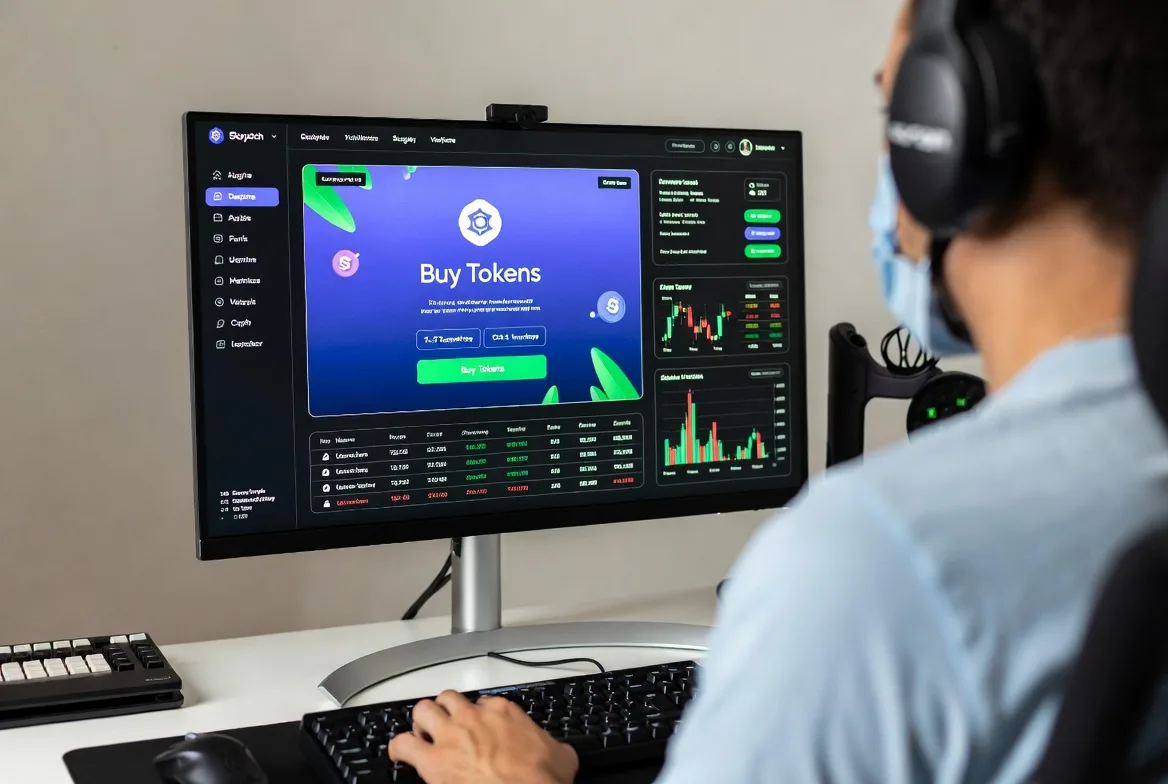
Think of the primary crypto market as the launch pad where brand-new tokens make their debut. Before you see coins trading on Coinbase or Binance, they’re sold here first—directly from the project teams to their earliest backers. It’s where the magic happens: a whitepaper becomes a funded reality, and early believers put money behind ideas that might become the next Ethereum or… well, the next forgotten token collecting digital dust.
You’ll find prices here that make secondary market listings look expensive. A token selling for $0.05 in the primary market might hit exchanges at $0.50 (or $0.005—the risk cuts both ways). But here’s the catch: your money gets locked up for months, sometimes years. You’re betting on potential, not performance. And roughly seven out of ten bets? They won’t pan out.
Whether you’re weighing an investment in someone’s seed round or planning your own token launch, you need to understand how this market actually works—not the sanitized version from project marketing materials.
Understanding the Primary Crypto Market
New digital assets don’t just appear on Uniswap out of thin air. They start here, in what we call the primary market. Projects building DeFi protocols, blockchain games, or Layer 2 solutions need capital. They create tokens and sell them directly to investors willing to fund development before there’s even a working product.
Traditional finance has done this forever. Companies sell stocks through IPOs, bonds through debt offerings. Investment banks run the show—Goldman Sachs underwrites the deal, Morgan Stanley sets the price, institutional investors get first dibs. The whole process costs millions and takes months of SEC paperwork.
Crypto flipped this model sideways. Instead of banks, you’ve got decentralized exchanges and launchpad platforms. Sometimes there’s no middleman at all—just a smart contract sitting on Ethereum, programmed to accept your ETH and spit out new tokens. The code handles everything: sale limits, pricing tiers, distribution schedules.
Back in 2017, the ICO craze turned this market into the Wild West. Projects raised $50 million in thirty minutes with nothing but a PDF and promises. Some delivered (shoutout to Chainlink). Most vanished faster than your Uncle Bob at Thanksgiving when political talk starts. By 2026, things have matured. Regulations tightened. Due diligence became standard. But the core concept remains: projects need money, investors want early access, tokens change hands before public trading begins.
Here’s what makes it different from buying crypto on Kraken: when you participate in a primary offering, your dollars flow directly into the project’s treasury. They use it to hire developers, audit smart contracts, build communities. In secondary markets, you’re just swapping tokens with another trader. The project already got their funding—they don’t see another penny from your transaction.
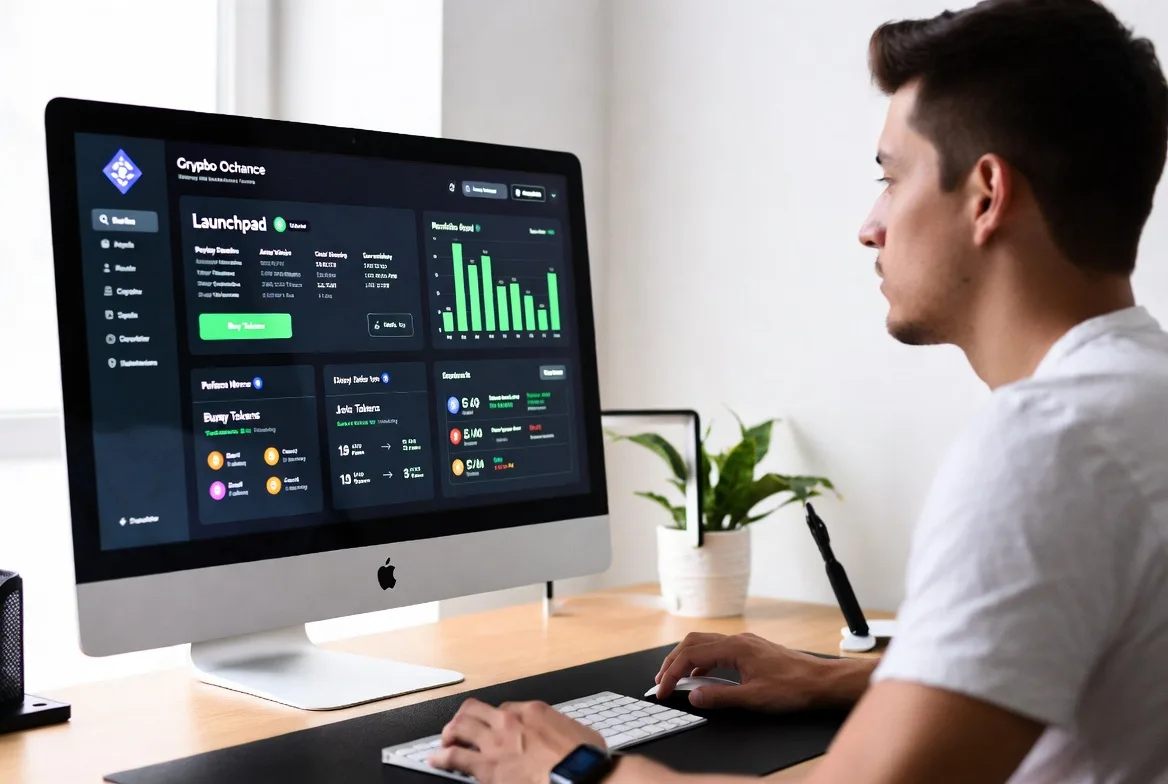
Projects accomplish multiple goals through primary market sales. Sure, they’re raising capital. But they’re also distributing governance rights, rewarding early community contributors, setting aside allocations for liquidity pools, and creating that initial holder base that’ll shape the project’s future. Screw up your primary market allocation strategy, and you’ll face governance attacks, liquidity crises, or concentrated whale holdings that tank your token price.
Primary vs Secondary Crypto Market
Here’s the simplest way to understand the split: primary markets create tokens and fund projects. Secondary markets trade existing tokens between people who want different things.
Timing tells you everything. Primary market participation happens before the public can buy—sometimes six months before, sometimes two years before. You’re committing money based on GitHub repositories, team résumés, and technology that’s still in testnet. Secondary markets kick off when exchanges list the token. Suddenly there’s a price chart, trading volume, and actual market forces determining what people will pay.
Who’s in the room changes dramatically. Primary markets attract venture funds writing $2 million checks, angel investors with industry connections, project insiders getting founder allocations, and retail investors who somehow scored whitelist spots. These folks accept lock-up periods because they’re paying $0.10 for tokens that might list at $0.80. Secondary markets? Everyone’s invited. Day traders, institutions, your cousin who just downloaded MetaMask last week—anyone with exchange access can participate.
| Feature | Primary Market | Secondary Market |
|---|---|---|
| Timing | Pre-launch phase; tokens not yet trading | Post-listing; continuous market access |
| Participants | VCs, angels, insiders, whitelist winners | Retail traders, institutions, general public |
| Pricing Mechanism | Project sets fixed price or auction terms | Supply/demand through DEX pools or order books |
| Liquidity | Zero liquidity; vesting locks tokens | High liquidity on established platforms |
| Risk Level | Extreme; total loss common | Substantial but mitigated by price transparency |
| Regulatory Oversight | SEC securities scrutiny; KYC mandated | Exchange compliance; standard trading rules |
Liquidity separates these markets more than anything. Buy tokens in a primary sale, and you’re stuck. The smart contract won’t release them for months. Your spouse asks why you can’t sell that crypto investment that’s up 300%? Because the vesting schedule says you get 10% monthly starting in March. Meanwhile, secondary market traders execute sells in seconds, converting tokens to stablecoins to dollars before coffee gets cold.
Key Differences in Price Discovery
Primary market pricing involves educated guesswork dressed up as financial modeling. Project teams calculate fully diluted valuations by comparing themselves to similar protocols. “Uniswap hit $20 billion FDV at launch, and we’re building something similar, so let’s target $100 million…” They divide total token supply into that target valuation, and boom—there’s your primary sale price. Is it accurate? You’ll find out when secondary trading starts.
Secondary markets don’t guess. Prices emerge from thousands of trades daily. Automated market makers on Uniswap use constant product formulas (x * y = k, if you’re into the math). Centralized exchanges match buy and sell orders. What you see is what the market believes right now, this second, based on everyone’s collective assessment of value.
Real-world example: Imagine a DeFi protocol sells tokens at $0.08 during their seed round, implying an $80 million valuation. Public sale happens at $0.15. Exchange listing day arrives and… the token opens at $0.04. Early investors who bought at $0.08 are underwater before vesting even ends. Or flip it: listing price hits $0.45, and the team’s sitting pretty while retail FOMO pushes it to $0.90 by day two. This volatility explains why sophisticated projects stagger vesting—preventing early backers from dumping everything the second exchange trading starts.
Who Participates in Each Market
Primary market access has become seriously tiered. Venture capital firms negotiate private sales nine months before public announcements. They’re paying 60% less than public round prices, writing $250,000 to $5 million checks, and accepting three-year vesting with a one-year cliff. These aren’t retail-friendly terms.
Retail gets table scraps—public sale rounds through launchpads. Minimum buy-ins might be $200. But first you’ll hold the launchpad’s token, complete KYC verification that’d make the TSA jealous, join their Discord, retweet launch announcements, and pray you win the lottery when 50,000 people compete for 2,000 allocation spots. Get selected? Congratulations, you can invest $500 maximum while that VC firm bought $2 million worth at half your price.
Secondary markets don’t care about your connections or net worth. Create a Coinbase account, pass basic verification, and you’re trading alongside Wall Street funds. A college student with $100 has the same market access as a pension fund with $100 million. Pricing treats everyone equally—no insider discounts, no allocation lotteries.
How New Tokens Enter the Primary Market
Token creation starts with code. Developers deploy smart contracts on Ethereum, Solana, BNB Chain, or whichever blockchain fits their needs. The contract defines everything: 1 billion total tokens, 20% to team wallets, 15% for liquidity, 5% annual staking rewards, 2% burn on transactions. These parameters live permanently on-chain. Can’t change them later without governance votes or upgrade mechanisms built in from day one.
Before asking anyone for money, legitimate projects spend three to six months preparing. They’re writing whitepapers that explain technology and tokenomics. Legal teams determine whether US securities laws apply (spoiler: they usually do). Marketing builds hype through Twitter threads, Medium articles, ambassador programs, and strategic partnership announcements. Auditing firms like CertiK or Quantstamp comb through smart contract code searching for vulnerabilities that’d let hackers drain funds.
Vetting happens differently depending on launch platform. Decentralized launchpads might require projects to stake $50,000 worth of the platform’s native token—skin in the game. Community governance votes determine which projects get featured. Centralized exchanges running IEOs act more like traditional investment banks. They’re reviewing team backgrounds, analyzing competitive positioning, checking that the code actually does what the whitepaper claims. Binance rejects 97% of IEO applications. That screening filters out obvious rug pulls, though it can’t predict which teams will lose motivation after raising $10 million.
Regulatory considerations got serious after 2024. The SEC published clearer guidance on crypto securities (finally). Projects targeting US investors now face a choice: register the offering (expensive, time-consuming), qualify for Regulation D exemptions (accredited investors only), use Regulation A+ for limited public sales, or just block US IP addresses entirely. Most choose option four. Geofencing keeps lawyers happy and costs near zero.
Launch timelines reveal project quality. Teams rushing from announcement to token sale in four weeks? Red flag. They haven’t audited contracts, finalized tokenomics, or built genuine community interest. Quality projects invest months. They’re coordinating with launchpad platforms, preparing legal documentation, scheduling marketing pushes, and setting up vesting contracts that’ll lock team tokens for years.
Types of Crypto Initial Offerings
The crypto industry invented multiple ways to sell tokens, each with different risk profiles, investor protections, and regulatory headaches.
ICO: Initial Coin Offering
ICOs owned 2017. Projects threw up a website, published a whitepaper, and accepted ETH or BTC through a smart contract. No intermediaries, no vetting, minimal legal compliance. Pure peer-to-peer fundraising at internet scale.
This model enabled both innovation and catastrophic fraud. Ethereum itself raised funds through an early token sale. So did legitimate projects like Filecoin and Tezos. But thousands of scams collected millions before disappearing completely. Remember Confido? Raised $375,000, then the entire team vanished. Website went dark. Social media deleted. Investors left holding worthless tokens.
Most ICOs set hard caps (maximum fundraising targets) and soft caps (minimum viable amounts). Bonus structures rewarded early participation—buy in the first week, get 20% extra tokens. This created FOMO that benefited scammers more than legitimate projects. By 2026, pure ICOs have virtually disappeared, replaced by more structured alternatives.
IDO: Initial DEX Offering
IDOs brought token launches to decentralized exchanges. Instead of projects selling directly, they create liquidity pools on Uniswap, PancakeSwap, or Raydium. Anyone can swap established crypto (ETH, USDC, BNB) for the new token through automated market makers.
The mechanics differ from traditional sales. Projects deposit equal dollar values of their new token and something like ETH into a liquidity pool. Say they add $500,000 worth of their token plus $500,000 in ETH. The AMM’s constant product formula handles pricing automatically. Early buyers get better rates. As more people buy, the token price increases according to the bonding curve. No central authority controls the process—just math and smart contracts.
Launchpad platforms systematized IDOs by adding structure. DAO Maker, Polkastarter, and TrustSwap vet projects before featuring them. Allocation tiers reward users who stake platform tokens. Lock up 5,000 platform tokens, get guaranteed access to $1,000 allocation. Lock up 50,000 tokens, you’re getting $10,000 allocation regardless of demand. This creates economic incentives for holding launchpad tokens while maintaining decentralized distribution.
IEO: Initial Exchange Offering
IEOs conduct token sales directly on centralized exchanges. Binance Launchpad, Coinbase Prime, Kraken—major platforms host sales for projects they’ve vetted. The exchange acts as gatekeeper, intermediary, and de facto endorser.
This model offers compelling advantages. Exchange due diligence filters out obvious scams (though it can’t predict project success). Instant access to millions of existing users beats building an audience from scratch. Guaranteed secondary market listing removes uncertainty—tokens will trade on the host exchange immediately. These benefits explain why projects accept the costs.
And the costs are substantial. Exchanges charge 5% to 20% of total funds raised. Listing fees add hundreds of thousands more. Technical requirements demand professional security audits, clean code, and compliance with exchange standards. Legal and regulatory compliance must satisfy the exchange’s risk tolerance. Only well-funded teams with serious projects can afford this route, which actually serves as a quality filter.
IPO vs IDO vs ICO Comparison
| Offering Type | Platform | Regulation Level | Investor Access | Typical Costs | Vesting Requirements | Liquidity Timeline |
|---|---|---|---|---|---|---|
| IPO | NYSE, NASDAQ, traditional stock exchanges | Comprehensive SEC registration | Initially limited to institutions and accredited investors | $5 million to $50 million+ in underwriting and legal fees | Insider lock-ups lasting 90-180 days | Trading begins 6-12 months after filing |
| ICO | Project’s own website or platform | Historically minimal; increasing enforcement | Originally open globally; now restricted | Low costs—mainly marketing and development | Highly variable; many had none | Immediate to 3 months post-sale |
| IDO | Decentralized exchanges like Uniswap | Minimal unless securities laws triggered | Technically open to anyone; often requires staking platform tokens | Moderate—liquidity provision and platform fees | Common practice; typically 3-12 month gradual release | Immediate trading through AMM pools |
| IEO | Binance, Coinbase, other major centralized exchanges | Moderate through exchange compliance procedures | Limited to verified exchange users | High—exchange takes 5-20% plus listing fees | Standard practice; 6-12 month vesting periods | Trading starts immediately on host exchange |
Traditional IPOs still win for investor protection and regulatory compliance. But $15 million in underwriting fees makes them impractical for crypto projects raising $3 million. The crypto-native alternatives trade oversight for accessibility—a calculated risk that matches this industry’s tolerance for volatility.
The asymmetric upside in primary market crypto investments can’t be matched in traditional markets, but you’re also facing 70-80% failure rates. I tell investors to build positions across 15-20 different primary offerings. Let the winners—and there will be 2-3 big winners—carry the entire portfolio. Everything else might go to zero.
Samantha Chen
Token Sale Mechanics and Pricing
Token sales in 2026 follow sophisticated multi-tier structures. Projects don’t just announce a sale and start collecting money. They’ve engineered allocation strategies that balance fundraising needs against long-term token holder alignment.
Private sale rounds happen first, often six to twelve months before public announcements. Venture capital firms and strategic investors negotiate deals directly with project teams. They’re committing $100,000 to $5 million, receiving 40-70% discounts versus eventual public pricing, and accepting vesting schedules that span two or three years. Smart contracts enforce these terms—tokens remain locked regardless of market conditions or profit potential.
Pre-sale rounds open to angel investors and smaller funds. Minimum investments drop to the $10,000-$50,000 range. Discounts shrink to 20-40% below public pricing. Vesting shortens to 6-18 months. These rounds fill through crypto-focused investment networks and communities rather than public channels. You won’t see tweets advertising them—deal flow happens through personal connections and industry relationships.
Public sale rounds target retail investors and community members. Minimum investments might be just $100. Discounts range from 0-20%, sometimes matching exchange listing prices entirely. These sales generate marketing momentum and distribute tokens widely. A project with 10,000 community holders has 10,000 people incentivized to promote it, provide feedback, and participate in governance. Vesting for public participants varies wildly—some projects offer immediate liquidity, others impose 3-6 month lock-ups.
Price-setting mechanisms come in several flavors. Fixed-price sales establish one token price for the entire offering period. Simple, transparent, easy to understand. Downside? If demand massively exceeds supply, the project left money on the table. Dutch auctions start at artificially high prices and decrease over time until all tokens sell or a floor price hits. Theoretically this finds market-clearing prices. Practically it confuses retail investors who can’t decide when to buy.
Whitelist processes manage situations where 100,000 people want allocation spots but only 5,000 exist. Projects announce application windows—usually one to two weeks. Interested investors submit information, complete KYC verification that’d rival a mortgage application, and often complete tasks: join the Discord, follow on Twitter, share announcement posts, refer friends. Selection methods vary. First-come-first-served rewards quick action. Lottery systems add randomness. Tier-based allocation gives priority to users who’ve staked platform tokens—the more you’ve locked up, the bigger your guaranteed allocation.
Allocation caps prevent whales from monopolizing sales. Individual limits typically range from $500 to $5,000 for public rounds. Some sophisticated projects implement tiered structures: stake 1,000 platform tokens, get guaranteed $500 allocation. Stake 10,000 tokens, you’re guaranteed $2,000. Stake 50,000 tokens, $5,000 allocation is yours. Excess demand fills through lottery spots.
Vesting schedules serve one purpose: keeping early investors aligned with project success rather than chasing quick exits. Common structures include cliff periods where zero tokens release for 6-12 months, followed by linear vesting that gradually unlocks holdings over 12-24 months. Team and advisor tokens often vest across 3-4 years. This signals commitment. Teams willing to lock their own tokens for years are probably building something real, not planning a rug pull six months post-launch.
Primary Market Crypto Investment Risks and Opportunities

Early-stage crypto investments through primary markets offer return potential that makes traditional venture capital look conservative. They also lose money at rates that’d make Las Vegas jealous.
The bull case goes like this: buy tokens at $0.05 during seed rounds, watch them list on exchanges at $0.50, sell for 10x returns in under six months. Projects achieving real product-market fit and sustainable user growth can generate 50-100x returns over two to three years. These outliers exist. Chainlink seed investors saw 200x returns. Solana early backers hit similar multiples. The possibility of these outcomes drives the entire venture capital model.
Primary market access diversifies portfolios beyond stocks and bonds. You’re getting exposure to decentralized finance protocols that might reshape banking. Blockchain gaming projects building virtual economies. Layer 2 scaling solutions addressing Ethereum’s throughput problems. Infrastructure plays that could become the AWS of Web3. Early investors don’t just own tokens—they participate in governance, influence roadmap decisions, and join communities of builders and believers.
Now the reality check. Project failure rates exceed 70% by conservative estimates. Many tokens lose 90-99% of value within twelve months. Technical vulnerabilities get exploited. Teams quit when crypto winter arrives and funding dries up. Competitors build better products. Regulations kill business models. Markets simply don’t care about your idea. All contribute to brutal failure rates.
Liquidity risk traps capital for years. Your tokens are vesting for eighteen months, the market crashes 80%, and you can’t sell a single token to cut losses. Projects delay exchange listings indefinitely. Or they list on obscure DEXs with $2,000 daily volume where any sell order tanks prices 40%. The opportunity cost compounds—capital locked in a failing project can’t deploy into better opportunities emerging elsewhere.
Fraud hasn’t disappeared despite better vetting. Teams fabricate credentials—that Stanford PhD? He dropped out sophomore year. “Partnerships” with major companies? They sent an introductory email that got ignored. Anonymous teams rug pull by draining liquidity pools. Smart contract backdoors let developers mint unlimited tokens. Pump-and-dump schemes coordinate temporary hype before insiders exit. Distinguishing legitimate projects from sophisticated scams requires expertise most retail investors simply don’t have.
Due diligence for primary market opportunities demands serious effort. You’re verifying team identities through LinkedIn profiles with employment history confirmed by former colleagues. GitHub contributions prove technical competence. Smart contract audits from CertiK, Quantstamp, or Trail of Bits identify vulnerabilities. Tokenomics analysis reveals whether inflation rates are sustainable or if the team allocated themselves 40% of supply. Competitive analysis assesses whether this project solves real problems differently than existing solutions. Community engagement quality on Discord and Twitter separates genuine believers from paid shills.
Regulatory uncertainty creates layers of risk traditional investors rarely face. The SEC’s position on token securities classification evolves constantly. Yesterday’s compliant offering structure faces enforcement actions tomorrow. Projects excluding US investors during primary sales still get sued. You might discover tokens you bought qualify as unregistered securities, limiting resale options or triggering tax complications.
Successful primary market investors copy venture capital playbooks. They build portfolios of 15-20 positions, accepting that 12 will fail or underperform. They size positions so 2-3 big winners generate portfolio-level returns that offset all losses. They maintain 3-5 year time horizons instead of checking prices daily. They resist FOMO when friends are bragging about 50x returns. They continuously educate themselves about blockchain technology, market dynamics, and emerging trends. They take profits methodically rather than holding everything hoping for 100x returns.
FAQs
Absolutely—retail investors participate in primary markets through public sale rounds, launchpad platforms like DAO Maker or TrustSwap, and IEOs on exchanges like Binance or Coinbase. But expect hurdles: KYC verification that asks for government IDs, proof of address, and sometimes selfie videos. Many platforms require holding their native tokens to qualify for allocations. Lottery systems mean you might complete all requirements and still not get selected when 40,000 people compete for 3,000 spots. The deepest discounts and earliest access remain exclusive to accredited investors and VCs through private rounds. US-based projects often restrict retail participation entirely due to securities regulations, limiting access to investors meeting accreditation standards ($200,000+ annual income or $1 million+ net worth excluding primary residence).
Minimums swing wildly based on sale round and platform. Private sales targeting institutions set minimums at $100,000 to $1 million—not retail-friendly territory. Public sales and launchpad offerings start at $100 to $1,000 to encourage broad participation. Some projects cap individual allocations at $500-$5,000, preventing whales from monopolizing supply. IDOs on decentralized exchanges technically have no minimums beyond gas fees ($5-$50 depending on network congestion), though practical considerations make investments below $50 inefficient—you’ll pay $30 in transaction fees to buy $40 worth of tokens.
Lock-up periods depend entirely on which sale round you entered and investor category. Private sale participants typically face 12-36 month vesting schedules with 6-12 month cliffs where zero tokens release. After the cliff, gradual monthly or quarterly releases occur. Public sale participants might get immediate liquidity, 3-6 month lock-ups, or staggered releases over time. Team and advisor tokens commonly vest over 3-4 years, signaling long-term commitment. Vesting schedules are coded into smart contracts that automatically release tokens according to predetermined timelines—completely impossible to circumvent or negotiate away once deployed.
Primary market crypto investments face increasing regulatory scrutiny from multiple agencies. The SEC applies the Howey Test to determine securities classification, examining whether buyers expect profits primarily from others’ efforts. Tokens qualifying as securities must either register with the SEC (expensive, time-consuming) or qualify for exemptions. Regulation D limits sales to accredited investors. Regulation A+ allows limited public offerings with caps. Regulation S permits sales to non-US persons. Many projects simply exclude US investors through IP geofencing to avoid regulatory complexity entirely. The CFTC regulates certain crypto commodities. FinCEN enforces anti-money laundering and know-your-customer requirements. State regulators add another layer through money transmitter licenses and securities registrations. The regulatory framework continues evolving, creating ongoing uncertainty for both projects and investors.
When projects fail post-sale, investors typically lose everything with zero recourse. Unlike traditional securities where bankruptcy proceedings might recover partial value through asset liquidation, failed crypto projects rarely hold meaningful assets to distribute. Smart contracts continue existing on blockchains permanently, but tokens become worthless without active development, user adoption, or market interest. Some projects execute “rug pulls” where teams drain liquidity pools or treasury funds before disappearing completely—social media deleted, websites offline, Discord servers abandoned. Class action lawsuits occasionally emerge but rarely recover significant funds. Treat primary market investments as high-risk capital you can afford to lose completely. Position sizing within diversified portfolios becomes critical—losing 100% on a 5% portfolio position is manageable; losing 100% on a 50% position is devastating.
The primary crypto market remains the essential birthplace where blockchain concepts transform into funded projects, offering early investors token access before public markets establish pricing through trading activity. This market operates through diverse mechanisms—ICOs that prioritized permissionless access, IDOs leveraging decentralized exchange infrastructure, and IEOs adding centralized platform vetting. Each balances accessibility against investor protection differently, creating options for projects at various stages and investors with different risk tolerances.
Successfully navigating primary crypto markets demands rigorous due diligence that goes beyond reading whitepapers and watching promotional videos. You’re verifying team credentials, analyzing smart contract code, assessing competitive positioning, and evaluating whether tokenomics create sustainable value or inevitable sell pressure. Portfolio diversification across 15-20 positions helps ensure a few winners offset inevitable losses. Realistic expectations about 70%+ failure rates prevent emotional decision-making when projects underperform or collapse entirely.
The regulatory environment continues evolving, particularly in the US where the SEC, CFTC, and state regulators all claim jurisdiction over various aspects of token sales. Staying informed about securities classifications, accreditation requirements, and compliance obligations protects you from inadvertently violating regulations or investing in projects facing enforcement actions.
For investors willing to accept extreme volatility, extended lock-up periods, and high failure rates, the primary crypto market provides exposure to technological innovation at its earliest stages. You’re not just buying tokens—you’re joining communities, participating in governance, and potentially funding protocols that reshape finance, gaming, social media, or internet infrastructure. The key lies in treating these investments like venture capital positions: appropriate sizing, acceptance of illiquidity, and portfolio construction where 2-3 massive winners can offset a dozen complete losses.