Cryptocurrency communities speak their own dialect, and no word embodies the culture quite like HODL. Scroll through any Bitcoin subreddit during a market crash, and you’ll find thousands of people posting rocket emojis, declaring “HODL the line!” and sharing memes about refusing to sell. What began as one drunk forum user’s typo in 2013 has morphed into an investment philosophy that influences how everyday people handle their digital assets.
Grasping what HODL really means goes deeper than memorizing an acronym. It’s a mindset that helps investors survive 50% portfolio drops without selling. It’s a community identifier. For many, it’s a psychological crutch that prevents destructive trading habits. If you’re weighing whether to buy your first cryptocurrency or wondering if you should keep checking prices every three hours, understanding this approach can reshape your entire strategy.
The Origin Story Behind HODL
December 18, 2013. Bitcoin’s price had plummeted from roughly $1,150 to somewhere around $600 in just days. The BitcoinTalk forum—crypto’s nerve center back then—filled with panicked posts about selling before things collapsed further.
A user named GameKyuubi opened a new thread at 10:03 AM UTC. The title read “I AM HODLING.” Inside, he’d written what became internet legend: a rambling, whiskey-fueled confession that he was a terrible trader who always sold low and bought high. Despite knowing he probably should sell, he announced he’d keep his Bitcoin because timing the market had never worked for him. That misspelling—HODLING instead of HOLDING—was obvious to everyone.
The community pounced immediately. Within an hour, people created images of Mel Gibson from Braveheart with “HODL” captions. Someone made an animated GIF. Parody threads popped up. What should’ve been just another forgotten drunk post instead became the rally cry for an entire movement.
Here’s why it stuck: the typo perfectly captured the stubborn, almost ridiculous determination of early Bitcoin adopters who refused to sell despite watching their portfolios get demolished. It was defiant. It was funny. It was relatable.
Within a year, people retroactively created an acronym—”Hold On for Dear Life”—though GameKyuubi never meant that originally. The backronym gave HODL additional legitimacy and spread the term beyond Bitcoin into every cryptocurrency community. Today, Coinbase references HODLing in their educational materials, Bloomberg writes articles about “HODLer psychology,” and researchers publish academic papers analyzing how HODL behavior affects market dynamics.
HODL Meaning Explained for Beginners
Strip away the memes, and HODL means purchasing cryptocurrency and refusing to sell regardless of what price does next. But calling it simply “buy and hold” misses the cultural weight.
HODL represents a philosophical middle finger to short-term trading. It’s built on conviction that cryptocurrencies—Bitcoin especially—will gain massive value over five, ten, or twenty years, which makes this month’s 30% crash meaningless noise. Someone truly HODLing doesn’t refresh CoinMarketCap every fifteen minutes, doesn’t text their friends panicking when Ethereum drops 40% in a week, and doesn’t attempt timing tops and bottoms.
That “Hold On for Dear Life” acronym emphasizes the emotional gauntlet. Imagine buying $10,000 worth of Bitcoin, watching it become $5,000 two months later, then $3,000 two months after that. Your stomach churns. Friends question your sanity. Every financial news outlet predicts crypto’s demise. HODL means maintaining faith through all of it.
For newcomers, this approach offers an accessible entry point. You don’t need to decode Japanese candlestick patterns, understand Fibonacci retracements, or wake up at 3 AM for Asian market opens. Find projects you genuinely believe in, purchase them, store them securely, and stop obsessing. The framework eliminates constant decision-making pressure and sidesteps the risk of expensive mistakes from poor timing.
That said, HODL isn’t just ignoring your portfolio completely. People who succeed with this strategy still reassess their holdings every few months, follow major technological updates, and make adjustments when core assumptions break down. The distinction is they’re not reacting to hourly price candles or Twitter FUD.

How the HODL Strategy Actually Works
Executing HODL looks simple on paper, but maintaining discipline separates successful long-term holders from those who crack during the first serious correction.
Research and Initial Purchase: You identify cryptocurrencies with legitimate fundamentals—innovative technology, active developer communities, solving actual problems, or strong network effects. You invest only what you could lose entirely without affecting your life (absolutely critical in crypto), then execute your purchase.
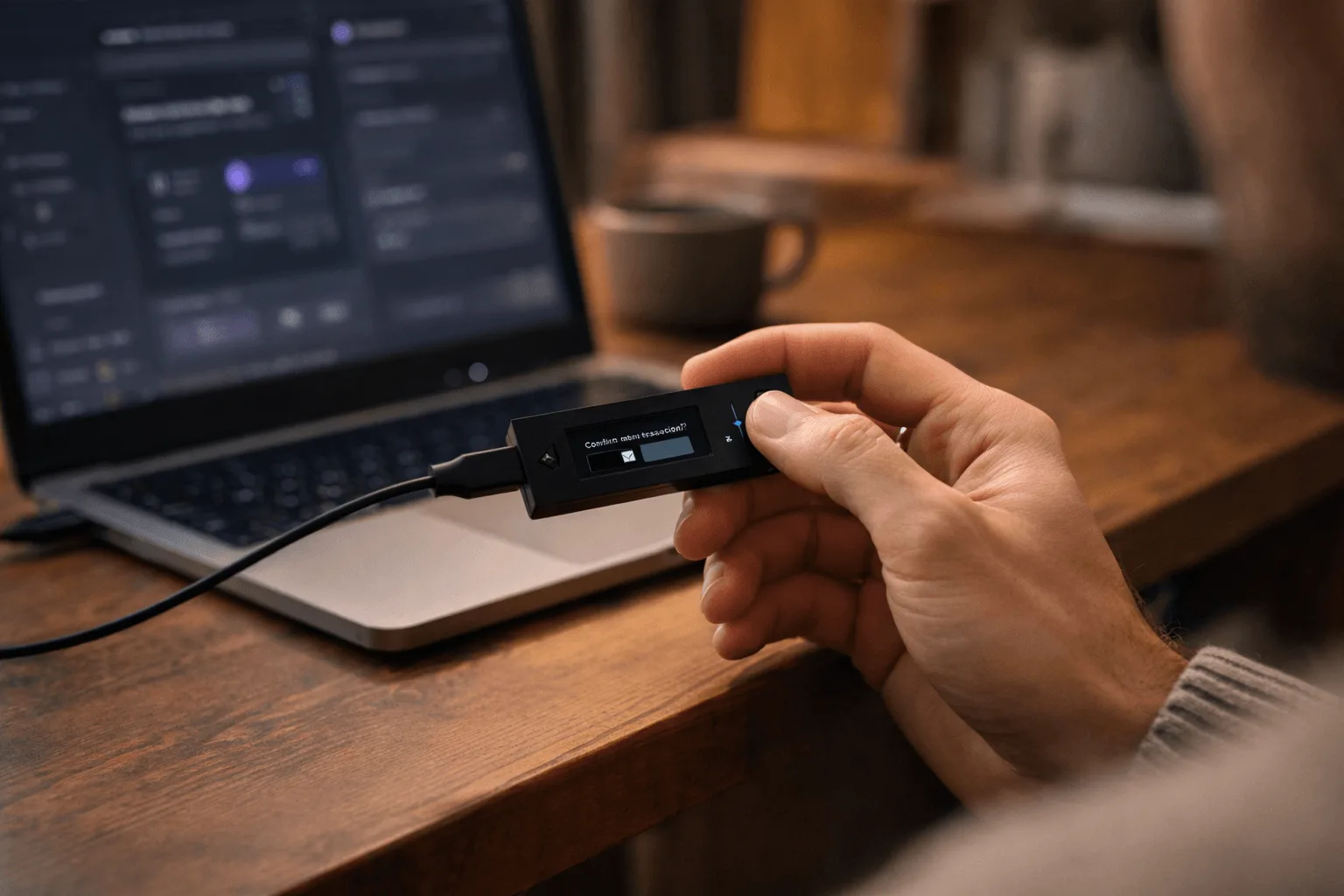
Moving to Cold Storage: Real HODLers transfer their crypto off exchanges into personal custody. Hardware wallets like Ledger or Trezor are standard because they protect against exchange hacks and, crucially, make impulsive selling physically difficult. When your crypto requires plugging in a device, entering a PIN, and confirming transactions manually, you’re far less likely to panic-sell at 2 AM.
Surviving Volatility: Here’s where theory meets brutal reality. Bitcoin has crashed over 80% from peak to trough across multiple cycles. Ethereum fell from $1,400 down to $80 between January 2018 and December 2019. People who bought at tops endured literal years of deep losses before returning to profit. The strategy demands accepting that your entire portfolio might show -60% for extended stretches.
Thinking in Years: Serious HODLers measure timeframes in years minimum, not weeks or months. Bitcoin‘s four-year halving cycles provide common reference points, though plenty of holders plan for ten-year-plus horizons. The longer you’re willing to wait, the more short-term chaos becomes irrelevant.
Dollar-Cost Averaging: Rather than investing everything at once, many HODLers buy fixed dollar amounts on a schedule—every Monday, first of the month, whatever. This approach reduces the nightmare scenario of investing your entire stack right before a 50% drop and creates an averaged entry price across various market conditions.
Occasional Portfolio Adjustments: Absolute HODL would mean never selling a single satoshi, but most real practitioners allow limited flexibility. Maybe you take 20% profits when your portfolio 10x’s. Perhaps you rebalance between assets annually. Or you’ll exit projects where the founding team abandoned development. The key difference from trading: you’re not reacting to short-term price movement.
This works best when you’ve invested time understanding what you own. HODLing something you don’t actually believe in becomes nearly impossible when it drops 70% and stays there for eighteen months.
HODL vs Trading: Key Differences
Choosing between long-term holding and active trading means picking fundamentally opposite approaches to crypto. Here’s the real-world comparison:
| Factor | HODL Approach | Active Trading |
|---|---|---|
| Time Required | Under an hour weekly | Multiple hours daily |
| Stress Factor | Moderate spikes during crashes | Constantly elevated |
| Learning Curve | Understanding project fundamentals | Chart analysis, indicators, order types |
| Tax Headaches | Minimal reporting | Extensive tracking needed |
| Cumulative Fees | Nearly negligible | Significant over time |
| Return Potential | Historically strong long-term | Extremely variable by skill |
| Catastrophic Loss Risk | Lower (time heals wounds) | Higher (leverage, bad timing) |
| Ideal Candidate | Patient people with jobs | Experienced, full-time participants |
Active trading means predicting where price heads next week, tomorrow, or even in the next hour. Traders jump in and out of positions constantly, often using borrowed money (leverage) to amplify returns—and losses. You need fluency in technical indicators, order book analysis, market psychology, and risk management.
HODLing trades intensity and complexity for patience and conviction. You’re betting that cryptocurrencies increase in value as technology matures and adoption grows, regardless of what happens between now and 2030.
When HODL Makes Sense
This strategy works particularly well in specific situations:
You’ve got time on your side. If this money sits untouched for five-plus years, short-term volatility is just noise. Bitcoin’s entire history shows that people who held for four-year-plus periods—despite gut-wrenching crashes—came out ahead, though past performance never guarantees future results.
You’ve never successfully traded anything. Research consistently demonstrates that somewhere around 70-90% of retail traders lose money. If you haven’t proven an edge through documented profitable trades, HODLing removes the risk of destroying your capital through emotional decisions and mistimed entries.
You’re working full-time. Trading demands screen time that’s incompatible with most careers. HODLing fits around your existing life without requiring you to monitor four-hour candles during client meetings or set phone alarms for 2 AM Bitcoin pumps.
You genuinely believe in the technology. If you’re convinced blockchain will revolutionize finance, transform supply chains, or reshape digital ownership over the next decade, HODLing aligns your money with your actual worldview.
You prefer tax simplicity. U.S. tax code treats crypto held beyond twelve months favorably through long-term capital gains rates. HODLing creates maybe one or two taxable events per year instead of dozens or hundreds that active traders face.
When Trading Might Be Better
Sometimes active trading makes more sense:
You’ve got documented trading success. If you can point to years of profitable trades with a proven system and disciplined risk management, active approaches might generate stronger returns than passive holding.
You genuinely enjoy the process. Some people find market analysis intellectually stimulating rather than exhausting. If trading energizes you and you’re consistently profitable, it might fit your personality better than watching paint dry.
You lack conviction about crypto’s future. If you don’t actually believe cryptocurrencies will exist in ten years, why hold them? Trading at least lets you potentially profit from volatility even if you’re skeptical about long-term value.
You need money soon. HODL defers gains into the future. If you need income within the next year or two, trading strategies or different investments entirely make more sense.
Most experienced crypto investors I know use hybrid approaches—maybe 70% of holdings are core HODL positions, while they actively trade with the remaining 30% to stay engaged and potentially generate additional returns.

Why People Choose to HODL Cryptocurrency
People become committed HODLers for reasons that extend beyond simple portfolio theory:
Escaping psychological traps. Trading activates every terrible impulse humans have around money. We sell in terror after 40% drops (locking in losses), then chase prices back up after 60% rallies (buying high). We trade too frequently, make revenge trades after losses, and cut winners while letting losers run. HODL eliminates 95% of these decision points. You buy once, then remove the ability to constantly second-guess yourself.
Tax advantages are substantial. The IRS treats every single trade as a taxable event. Trade Bitcoin for Ethereum? You owe taxes on any Bitcoin gains. Swap back a week later? Another taxable event. Active traders can generate hundreds of taxable transactions annually, creating accounting nightmares and potentially bumping themselves into higher tax brackets. HODLers might not have a single taxable event for years, then eventually pay preferential long-term capital gains rates when they do sell.
Fees compound brutally. Individual trading fees look tiny—0.1% to 0.5% per trade seems trivial. Execute 200 trades this year, though, and you’ve potentially surrendered 20-50% to fees before even considering whether your trades were profitable. HODLers pay fees twice: buying and eventually selling.
Technology adoption takes decades. Many HODLers view crypto similarly to internet stocks in 1995. They believe we’re in early innings of a transformation that’ll take twenty or thirty years to fully play out. From that perspective, whether you bought Bitcoin at $28,000 versus $42,000 becomes meaningless if it eventually reaches $500,000 in the 2030s.
Time is actually scarce. Most people don’t have three spare hours daily to analyze markets. HODL is the ultimate low-maintenance strategy for professionals who want crypto exposure without crypto becoming a second career.
Diamond hands as identity. In crypto culture, having “diamond hands” means you can hold through absolutely brutal volatility without flinching. It’s a badge of honor, a mark of belonging, contrasted against “paper hands” who fold at the first sign of trouble. This social element creates community reinforcement—when thousands of people in your online communities encourage HODLing during crashes, maintaining conviction becomes easier.
Michael Saylor—MicroStrategy’s CEO who bought billions in Bitcoin for his company’s treasury—articulated this mindset:
The best time to buy Bitcoin was ten years ago. The second-best time is today. The worst time to sell is tomorrow.
Michael Saylor
This philosophy drives the HODL movement: conviction that future appreciation will make today’s price movements look microscopic in hindsight.
Common HODL Mistakes to Avoid
HODL sounds foolproof but can become disastrous when executed poorly. Watch for these pitfalls:
Holding projects that have fundamentally failed. Thousands of cryptocurrencies have gone completely to zero. Developers disappeared. Technology stopped working. Hacks destroyed credibility. HODL doesn’t mean blindly clutching everything forever. If a project loses its development team, suffers repeated critical security failures, or fundamentally breaks its value proposition, holding becomes “refusing to admit you’re wrong.” Successful HODLers reassess quarterly: Is development still active? Is adoption actually happening? Have core assumptions proven false?
Refusing to ever take chips off the table. Purist HODL means never selling, but this can be financially suboptimal. If your $5,000 investment becomes $250,000, taking $5,000 or even $50,000 off protects against complete reversal. Plenty of 2017 HODLers who never took profits watched life-changing gains evaporate through 2018’s crash. One reasonable approach: recover your initial investment after major gains, letting the remainder ride as pure profit.
Going all-in on one cryptocurrency. HODLing exclusively Bitcoin or only Ethereum concentrates risk enormously. Even Bitcoin—the most established cryptocurrency by far—has dropped over 80% from peak to trough multiple times historically. Spreading holdings across three to seven quality projects with different use cases reduces single-point-of-failure risk while preserving upside potential.
Leaving everything on exchanges. Long-term holding makes you a long-term target for hackers. Cryptocurrency sitting on exchanges can be stolen in breaches, frozen by regulators, or lost if the exchange fails (remember Mt. Gox, FTX, etc.). Actual HODLers use hardware wallets, store recovery seed phrases in multiple physical locations, and never publicly discuss their holdings on social media.
Ignoring cost basis tracking. Eventually you’ll sell or spend your crypto. If you haven’t maintained records of purchase dates, quantities, and prices, calculating taxes becomes a nightmare. Keep detailed records from day one—even if you’re HODLing for ten years, future-you will desperately appreciate present-you’s record-keeping.
HODLing without actual conviction. If you’re holding just because crypto-Twitter told you to, you’ll likely panic-sell at the absolute worst moment. Successful long-term holding requires personal conviction built on research. You need to understand what you own well enough that you can hold through 60% drawdowns without losing sleep.
Never defining your exit. “HODL forever” sounds romantic, but most people ultimately invest to use the money. Whether that’s retirement funding, a house down payment, starting a business, or achieving financial independence, knowing your exit criteria beforehand helps you actually realize gains instead of riding every wave up and back down indefinitely.
FAQs
They’re cousins but not identical twins. HODL describes a strategy—purchasing crypto and keeping it long-term. Diamond hands describes a personality trait or mental fortitude—the capacity to hold through absolutely savage volatility without panic-selling. You could technically HODL while lacking diamond hands (holding but constantly anxious, checking prices obsessively, losing sleep). True diamond hands means HODLing with genuine calm and conviction. Crypto communities use them interchangeably, though diamond hands emphasizes the psychological strength component more than the strategy itself.
No magic number exists, but serious HODLers typically think in terms of one complete Bitcoin cycle minimum—roughly four years, tracking Bitcoin’s halving schedule. Many plan for five to ten years or longer. Your personal timeframe should align with your financial goals and conviction strength. Need this money in eighteen months? HODLing volatile assets probably doesn’t fit. The longer you can wait, the more volatility becomes tolerable and the better your odds of capturing meaningful long-term appreciation.
Under U.S. tax law, simply holding cryptocurrency creates zero taxable events. You only trigger taxes when selling, trading one crypto for another, or using cryptocurrency to buy goods and services. This represents a massive advantage of HODLing—you defer taxes indefinitely. Once you do eventually sell, positions held beyond twelve months qualify for long-term capital gains treatment (taxed at 0%, 15%, or 20% based on total income) instead of ordinary income rates that hit short-term trades (potentially 10% to 37%).
HODLing means keeping crypto in a wallet without any additional action. Staking involves locking specific cryptocurrencies (Ethereum, Cardano, Solana, and others) to help validate transactions on their networks, earning rewards in exchange. You can do both simultaneously—hold long-term while earning staking yields. Staking introduces additional complexity: potential lock-up periods where you can’t access funds, technical requirements, slashing risks (losing some stake for validator mistakes), and extra tax reporting since staking rewards count as taxable income when received.
Absolutely, yes. Buy at a market peak and hold something that never recovers, and you’ll lose money—potentially everything. Thousands of altcoins from 2017-2018 never regained their all-time highs and many went to zero. Even Bitcoin and Ethereum have had multi-year periods where HODLers stayed underwater. HODL reduces specific risks (bad trade timing, excessive fees, constant tax events) but doesn’t eliminate market risk, project failure risk, or terrible entry timing. You can still pick fundamentally flawed projects, buy at the absolute top, or hold something that ultimately fails.
Beginners should almost universally HODL first. Trading demands skills requiring months or years to develop, and the learning curve costs real money—most new traders lose their initial capital. HODLing gives beginners breathing room to learn about cryptocurrency markets, technology, and communities without the pressure of constant trading decisions. Start HODLing established projects like Bitcoin and Ethereum, spend six to twelve months learning how markets behave, and only consider trading once you’ve educated yourself extensively and can afford to lose your trading capital completely. Even then, many experienced investors eventually conclude HODLing outperforms their trading attempts.
HODL evolved from a drunken typo into a genuine investment approach because it solves real problems in cryptocurrency investing. This market’s extreme volatility, never-closing exchanges, and emotional intensity make successful trading brutally difficult. For regular people with careers, families, and lives beyond crypto, HODLing offers a practical way to participate without becoming a full-time trader.
The strategy isn’t without flaws. Holding through 60% portfolio crashes tests your conviction severely. Watching friends brag about trading gains while you sit still requires patience. Avoiding panic sales when every media outlet screams about crypto’s death demands discipline. But for people who believe in cryptocurrency’s long-term potential yet lack time or skill for active trading, HODL provides a framework that’s historically worked.
Whether you should HODL depends entirely on your goals, timeline, and personality. Investing money you won’t need for years, believing blockchain technology will eventually transform industries, and wanting to minimize stress and time commitment? The strategy fits well. Need current income, genuinely enjoy market analysis, or have proven trading skills? Different approaches might serve you better.
HODL’s beauty lies in its simplicity. In an ecosystem overflowing with complexity, leverage products, and sophisticated strategies requiring advanced degrees to understand, sometimes the best approach is one you’ll actually maintain through good times and terrible. Research quality projects thoroughly, buy what genuinely makes sense to you, secure it properly, and give the position time to develop. That’s the essence of HODL—and for millions of cryptocurrency investors, it’s been sufficient.