
Want to jump into Bitcoin right now? Your Visa or Mastercard can make that happen in under 15 minutes. But here’s what nobody mentions upfront: those same cards might cost you an extra $150 on a $1,000 purchase, and your bank could hit you with surprise fees that don’t show up until your statement arrives.
I’m going to walk you through exactly how credit card crypto purchases actually work—the real costs, the hidden catches, and when you’d be better off using a completely different payment method.
Can You Buy Crypto with a Credit Card?
Short answer: yes, but your bank might have other ideas.
Most major US crypto platforms—Coinbase, Kraken, Crypto.com, Gemini—will happily take your credit card. The catch? Your card issuer needs to approve the transaction first, and many won’t.
Chase? Nope. They’ve blocked crypto purchases since 2018. Bank of America? Same story. Capital One joined that club after initially allowing transactions. If you’ve got cards from any of these three banks, you’ll see an instant decline when you try to buy Bitcoin.
Wells Fargo and Citibank let the transactions go through, but—and this is a massive “but”—they frequently code them as cash advances. That means you’re paying a 5% fee right off the bat, plus interest starts accumulating immediately. No grace period, no rewards points, just instant debt at 27% APR.
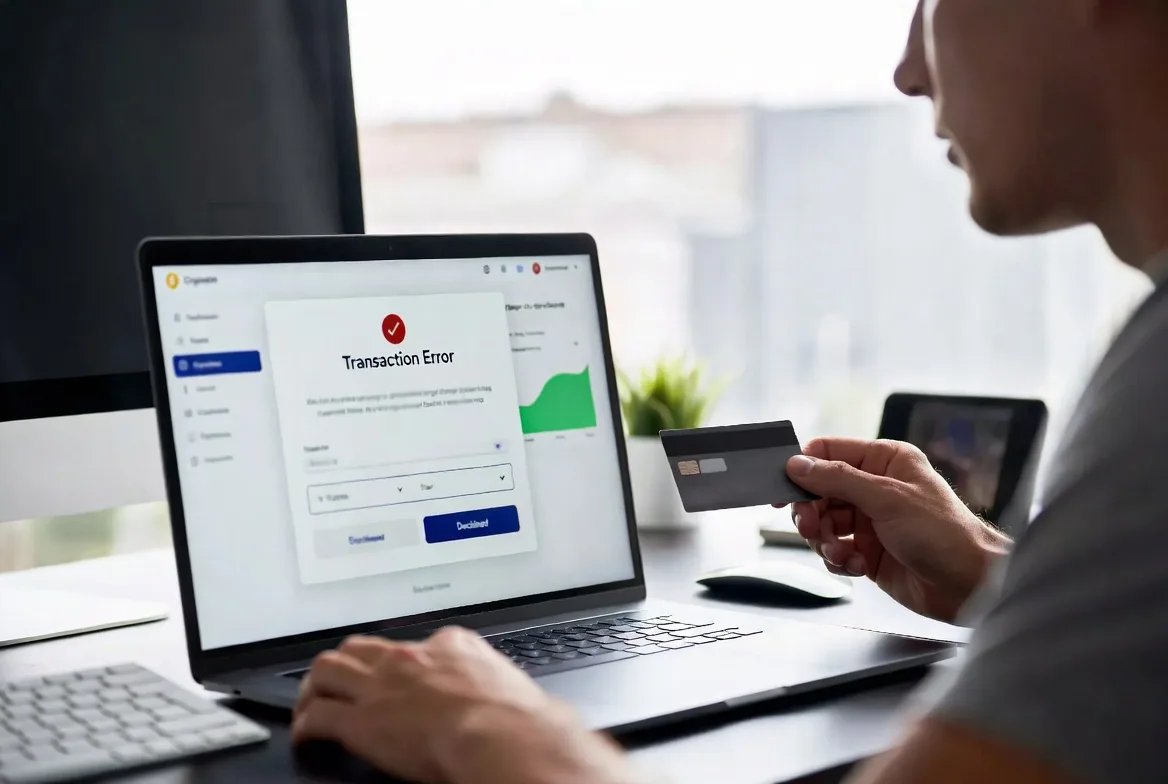
Discover and Amex take an unpredictable middle road. Some transactions sail through without issues. Others get flagged and declined. I’ve talked to Amex cardholders who successfully bought crypto one week, then got rejected the next week with the same card. Their fraud detection algorithms apparently can’t decide whether you’re a legitimate investor or a money launderer.
The regulatory environment keeps shifting too. After the SEC expanded its oversight in 2023, every major exchange implemented stricter verification requirements for card purchases. You’ll need government ID, a selfie, proof of address, and sometimes a bank statement showing your name. Expect this process to eat up 30-90 minutes on your first purchase.
Smaller exchanges struggle even more with card acceptance. They rely on payment processors like Simplex, MoonPay, or Wyre to handle the actual credit card transaction. If those partnerships fall through—which happens regularly due to chargeback issues—the exchange loses card functionality entirely. Don’t assume every platform accepts cards just because it’s listed on crypto comparison sites.
How Credit Card Crypto Purchases Work
Here’s the actual sequence when you buy crypto with plastic:
First, you’ll link your card through the exchange’s payment settings. Most platforms make you photograph your card (covering the middle eight digits) so they can match the name to your verified identity. Coinbase and Kraken both require this step, which catches people off guard when they’re trying to make a quick purchase.
When you hit “Buy,” the exchange doesn’t actually charge your card directly. They send your payment request to a third-party processor—usually Simplex, MoonPay, or one of a handful of specialized crypto payment companies. That processor runs the charge through Visa or Mastercard’s network, collects the money, and signals the exchange to release your cryptocurrency.
This whole dance typically takes 10-20 minutes. Sometimes it’s done in five. Occasionally, verification checks stretch it to an hour.
Your verification tier determines how much you can buy and how fast it processes. Bought less than $100? Most exchanges only check that your email is confirmed. Trying to grab $5,000 worth of Ethereum? Get ready for enhanced due diligence: proof of income, documentation showing where your money came from, maybe even a video call with their compliance team. These aren’t arbitrary hoops—they’re federal requirements under anti-money laundering laws.
The crypto lands in your exchange wallet almost instantly once payment clears. But here’s an annoying gotcha: you probably can’t move it off the platform right away. Most exchanges lock credit card purchases for 7-14 days to prevent fraud. If someone steals your card info and buys Bitcoin, the exchange wants time to catch it before that Bitcoin disappears into an untraceable wallet.

Credit Card Cash Advance Classification
Whether you’re making a regular purchase or taking a cash advance depends entirely on how your bank interprets merchant category codes.
When Coinbase (or whoever) processes your payment, they tag it with an MCC—a four-digit code that tells your bank what kind of merchant they are. Code 6051 specifically identifies cryptocurrency transactions. Some banks see that code and think “standard purchase.” Others see it and think “cash advance.”
The consequences of that interpretation are brutal. Cash advances don’t have grace periods. Interest starts accumulating the second the transaction posts—typically at 24-29% APR. You also pay an upfront fee of 3-5% (minimum $10). So a $1,000 crypto purchase classified as cash advance immediately costs you $30-50 in fees, then racks up about $2 per day in interest charges.
Visa and Mastercard punted this decision to individual banks back in 2022. That created a frustrating mess where identical purchases get treated differently based on who issued your card. Capital One codes everything crypto as cash advance—except they block the transactions entirely, so it’s theoretical. Citibank applies cash advance treatment based on which specific exchange you’re using and which payment processor they partner with.
You won’t know for sure until the transaction posts to your account. Check your statement carefully over the next 2-3 days. Cash advances appear in a separate section with different fee line items. Some people call their bank beforehand to ask about their crypto policy, but phone reps often give inconsistent or outdated information.
Fees and Costs for Credit Card Crypto Purchases
Let me break down what a credit card crypto purchase actually costs, because it’s never just the platform fee they advertise.
The exchange takes their cut first—anywhere from 1.5% to 4% depending on the platform. On Coinbase, that’s currently 3.99%. Kraken charges 3.75% plus a flat quarter. Crypto.com recently dropped theirs to 2.99% in a competitive move.
Then the payment processor (Simplex, MoonPay, etc.) adds their percentage. They’re handling fraud detection, chargeback management, and the interface with Visa/Mastercard networks. That service costs you another 2-5.5%. Simplex specifically charges 3.5% or $10, whichever is higher. MoonPay ranges from 4.5% to 5.5% based on transaction size.
Now stack cash advance fees on top if your bank decides to code it that way. That’s another 3-5%.
Let’s calculate a real example: You want $1,000 in Ethereum using your Citibank Visa on Coinbase.
- Coinbase platform fee: $39.90 (3.99%)
- Simplex processing: $35.00 (3.5%)
- Citibank cash advance fee: $50.00 (5%)
- Interest for 30 days at 29% APR: $24.00
- Total cost: $148.90
You only got $1,000 worth of crypto, but you’re on the hook for $1,148.90. That’s a 14.89% premium before the cryptocurrency moves one penny in value.
Compare that to a bank transfer where you’d pay maybe $15 total and wait three days.
How Fees Compare Across Funding Methods
| Payment Method | Exchange Takes | Processor Adds | Extra Surprise Fees | What You Actually Pay | How Long You Wait |
|---|---|---|---|---|---|
| Credit Card | 1.5%–4% | 2%–5.5% | 3%–5% if coded as cash advance | 3.5%–14.5% of purchase | 10–20 minutes |
| Debit Card | 1.5%–4% | 1%–2% | None | 2.5%–6% of purchase | 10–20 minutes |
| ACH Bank Transfer | 0%–1.5% | Nothing | Nothing | 0%–1.5% of purchase | 1–5 business days |
| Wire Transfer | 0%–0.5% | Nothing | Your bank’s $15–$30 wire fee | Flat $15–$30 regardless of amount | Same day to 24 hours |
Notice how bank transfers cost almost nothing? That’s why people who regularly buy crypto rarely use cards unless they’re desperately trying to catch a specific price point.

Credit Card vs Other Crypto Funding Methods
Debit cards give you most of the speed without the debt trap. Exchanges charge similar platform fees—that same 1.5-4% range—but payment processors treat debit differently since there’s less fraud risk. You’ll typically pay 1-2% instead of 3-5.5%. No chance of cash advance classification either, since you’re spending money you already have. The obvious limitation: you can only spend what’s in your checking account.
ACH bank transfers cost next to nothing but test your patience. Most exchanges charge zero or apply minimal fees (0.5% to 1.5% at most). The money takes one to five business days to arrive. During that time, Bitcoin might jump 10% or crash 15%—you’re stuck watching. Some platforms let you buy immediately against pending ACH deposits, but they lock those funds until the transfer completes. Can’t withdraw anything until the money truly clears.
Wire transfers make sense once you’re moving serious money. Your bank charges $15-30 for domestic outgoing wires, but exchanges don’t pile on additional fees. The money arrives within business hours to one day maximum. Do the math: on a $10,000 purchase, that $25 wire fee equals 0.25%. Compare that to the 4-6% you’d pay using a debit card, or the 8-15% hit from credit cards. Wires become the economical choice above certain dollar amounts.
Security differences matter more than most people consider. Credit cards give you robust fraud protection under federal law—you’re liable for $50 maximum on unauthorized charges, and most issuers waive that entirely. Bank transfers and wires offer zero protection once the money leaves your account. If you send $10,000 to a sketchy exchange that gets “hacked” next week, that money is gone. Your bank won’t help. Debit cards fall in between, with protection depending on how fast you report fraud.
The fundamental trade-off comes down to speed versus cost. Credit cards excel when you absolutely need to buy right this second—maybe Bitcoin just dropped to a price you’ve been waiting for. Bank transfers work better for planned purchases where you can afford to wait and keep more of your money. Debit cards serve everyday situations where you want reasonable speed without paying premium prices.
Purchase Limits and Restrictions by Payment Method
Credit card limits swing wildly based on your account history and verification level.
Brand new users? Expect $500-1,000 daily limits even after completing full identity verification. That’s universal across Coinbase, Kraken, Gemini—they all cap newcomers in that range. After 30 days of clean transaction history, most exchanges bump you to $2,000-5,000 daily. Full verification with proof of income documentation can unlock $10,000-25,000 daily limits, though your actual credit limit creates a hard ceiling regardless.
Coinbase runs a three-tier system: Level 1 verification gets you $1,000 daily. Level 2 opens up $25,000 daily. Level 3 (which requires extensive documentation including tax returns for some users) permits $50,000 daily. Each tier takes progressively longer to approve—Level 1 might happen in an hour, while Level 3 can take a week.
Kraken calculates limits monthly instead of daily. Their Starter tier allows $1,000 per month total across all payment methods. Intermediate tier raises that to $10,000 monthly. Pro verification permits up to $500,000 monthly. Same verification requirements—government ID, proof of address, source of funds—but the monthly calculation changes how you plan larger purchases.
Debit cards typically face tighter restrictions than credit. Most exchanges cap debit at $1,000-2,500 daily regardless of your verification tier. This reflects the higher fraud risk with debit transactions—stolen debit cards give criminals direct access to bank accounts, which makes processors nervous. Some platforms treat debit and credit identically, but more commonly they maintain separate, lower limits for debit.
Bank transfers and wires offer the highest limits once you’re fully verified. ACH deposits often max at $25,000-50,000 daily. Wire transfers frequently have no platform-imposed limits beyond what your bank allows. This makes them essential for anyone moving substantial amounts—institutional buyers, high-net-worth individuals, people consolidating 401k rollovers into crypto.
New account restrictions add frustrating delays. Most exchanges implement a 7-day hold on any crypto you purchase with credit cards. You can see it in your wallet, you can sell it back to USD, but you cannot withdraw it to your personal hardware wallet. This anti-fraud measure prevents criminals from using stolen cards to buy crypto and immediately moving it somewhere untraceable. Bank transfer purchases face shorter holds—typically 24-72 hours—since the payment method itself provides verification.
State regulations create geographic headaches. New York’s BitLicense requirements force exchanges to implement stricter limits specifically for NY residents. Hawaii and Texas have additional restrictions that some exchanges handle by simply blocking certain payment methods for residents of those states. Always check whether your state has special rules before opening an account.
Risks of Using Credit Cards for Crypto
Debt accumulation represents the obvious danger everyone ignores until it’s too late.

Credit card purchases create debt you must repay regardless of whether your crypto investment succeeds or crashes. You buy $5,000 in Bitcoin on credit, the price tanks 30% next week—you still owe $5,000 plus interest charges. Thousands of people learned this lesson the hard way during 2022’s bear market when Bitcoin dropped from $48,000 in March to $16,000 by December. Their credit card balances didn’t drop alongside it.
Interest charges compound relentlessly. With average credit card APRs sitting around 22% in 2026, that $5,000 crypto purchase costs you roughly $92 per month in interest if you carry the balance. Let it ride for a year making minimum payments, and you’ve handed over $1,000+ in pure interest—money that could’ve bought more crypto during price dips.
Price volatility creates asymmetric risk when leverage is involved. Bitcoin jumps 50%? Great, you profit minus fees and interest. Bitcoin drops 50%? You’ve lost half your investment’s value while still owing the full purchase amount plus accumulating interest. This asymmetry makes credit cards particularly dangerous for speculative positions—all the downside risk, limited upside benefit.
Credit utilization impacts hit your score immediately. That $5,000 crypto purchase on a card with a $10,000 limit pushes your utilization to 50%. Your credit score will likely drop 20-40 points within a billing cycle. High utilization signals financial stress to credit bureaus, which can affect mortgage applications, auto loans, or any other credit you’re trying to get approved for.
Fraud protection differences get misunderstood constantly. Yes, credit cards offer strong protection against unauthorized charges—someone steals your card and buys crypto, you’re covered. But they provide zero protection against buyer’s remorse, bad investment decisions, or market losses. If you dispute a legitimate crypto purchase because you regret it or the price dropped, your card issuer will side with the merchant. Some exchanges permanently ban users who file chargebacks, and you’ll still owe the money while losing access to whatever crypto you bought.
Cash advance treatment creates surprise costs that only reveal themselves on your statement. As I covered earlier, this classification eliminates your grace period and adds substantial fees. The surprise factor catches people completely off guard—they budget for one cost structure and get hit with another.
Using credit to buy cryptocurrency is basically leveraging leverage. You’re borrowing money to buy an extremely volatile asset, which means losses get magnified in both directions. I’ve worked with clients who accumulated $20,000 in credit card debt trying to catch crypto gains during the 2021 bull run. When the market reversed, they faced both investment losses and compounding interest charges. My rule is simple: if you can’t afford to buy crypto with money sitting in your checking account, you definitely can’t afford to buy it on credit.
Jennifer Martinez
FAQs
Depends entirely on who issued your card. Chase, Bank of America, and Capital One block every crypto transaction—you’ll get an instant decline. Citibank, Wells Fargo, and most regional banks allow them but might classify as cash advances. Discover and Amex evaluate each transaction individually based on your account history and spending patterns. Your best move: call the customer service number on the back of your card and ask specifically about cryptocurrency purchases before attempting one.
Sometimes yes, sometimes no—infuriating, I know. The classification depends on your card issuer’s internal policies and which merchant category code the exchange uses. Citibank, Wells Fargo, and several regional banks frequently treat crypto as cash advances. Most credit unions process them as standard purchases. The only way to know for certain: check your card member agreement or call customer service. Even then, you won’t know definitively until the transaction posts to your statement.
Rarely, and don’t count on it. Most issuers that allow crypto purchases explicitly exclude them from rewards programs in the fine print. Even if your transaction initially processes as a regular purchase and rewards post to your account, issuers often claw back those points or cash back during monthly reconciliation when they identify the merchant category. A few users report getting rewards that stuck, but it’s the exception, not the rule.
Set up an account on Coinbase, Kraken, or Crypto.com. Complete their basic identity verification—have your driver’s license and a utility bill ready. Link your credit card through payment settings (you’ll need to photograph it). Then place your purchase. First-timers should budget 30 minutes to 2 hours for account setup and initial verification. Once that’s done, subsequent purchases complete in under 10 minutes.
Debit wins for most situations. You get similar speed to credit cards with lower fees (2.5-6% versus 3.5-14.5%) and zero debt risk. You avoid cash advance classification, interest charges, and credit utilization score impacts. Credit cards only make sense in specific scenarios: you need the fraud protection for a large purchase, you want to preserve cash reserves for emergencies, or you’re buying a dip and plan to pay off the balance within the grace period.
Definitely not. Major US platforms like Coinbase, Kraken, Gemini, and Crypto.com accept credit cards through third-party payment processors. Smaller exchanges often lack the partnerships required to handle card payments—those relationships with Simplex, MoonPay, or Wyre cost money and require meeting strict compliance standards. Some exchanges that previously accepted cards dropped the option after getting hammered with chargebacks. Always verify an exchange’s accepted payment methods before creating an account if card access matters to you.
Credit cards serve one specific purpose in crypto: immediate access when timing is critical and you’ve got a concrete plan to repay quickly.
They’re tools, not solutions. Expensive tools. That 4-15% total cost makes them sustainable only for buyers who can zero out balances before interest hits.
For most people most of the time, bank transfers deliver better value despite requiring patience. Near-zero fees mean more of your money goes into actual crypto instead of into payment processing infrastructure. Debit cards strike a reasonable middle ground—decent speed at moderate cost without creating debt obligations.
Calculate total costs before clicking “buy.” Add up the exchange’s platform fee, payment processor charges, any potential cash advance fees, and projected interest if you’ll carry a balance. Compare that total to the crypto amount you’ll actually receive. Sometimes instant purchasing convenience costs you an extra 10-15% of your investment—money that could compound significantly over time if you’d kept it.
The cryptocurrency market will still exist tomorrow. Markets will still exist next week. Rushing into purchases with high-cost funding methods because you fear missing out typically produces worse outcomes than waiting three days for a bank transfer to clear. Build a funding strategy that matches your actual financial situation instead of letting FOMO dictate expensive decisions you’ll regret when the statement arrives.