
- How Cryptocurrency Payments Work in Online Retail
- Crypto Payment Gateway Options and Processor Roles
- Setting Up Crypto Checkout on Your Ecommerce Store
- Managing Price Volatility and Currency Risk
- Handling Refunds and Returns with Crypto Payments
- Cross-Border Sales and International Crypto Payments
- Real-World Considerations: Costs, Security, and Compliance
- Crypto Payment Processor Comparison
Digital currency transactions hit the mainstream hard—we’re talking billions flowing through merchant accounts every quarter. What started as a fringe experiment now handles real business volume, pushed along by three forces: customers asking for it, fees that undercut credit cards by half, and the appeal of getting paid from anywhere in the world without waiting on banks.
You’re here because you need practical answers about taking crypto payments. This guide covers everything from the moment a Bitcoin payment hits the blockchain to filing your taxes correctly, with specific focus on what applies to US-based merchants.
How Cryptocurrency Payments Work in Online Retail
Credit card payments run through established rails—Visa, Mastercard, acquiring banks, the whole nine yards. Accepting crypto in ecommerce works completely differently, and you’ll save yourself headaches by understanding what actually happens.
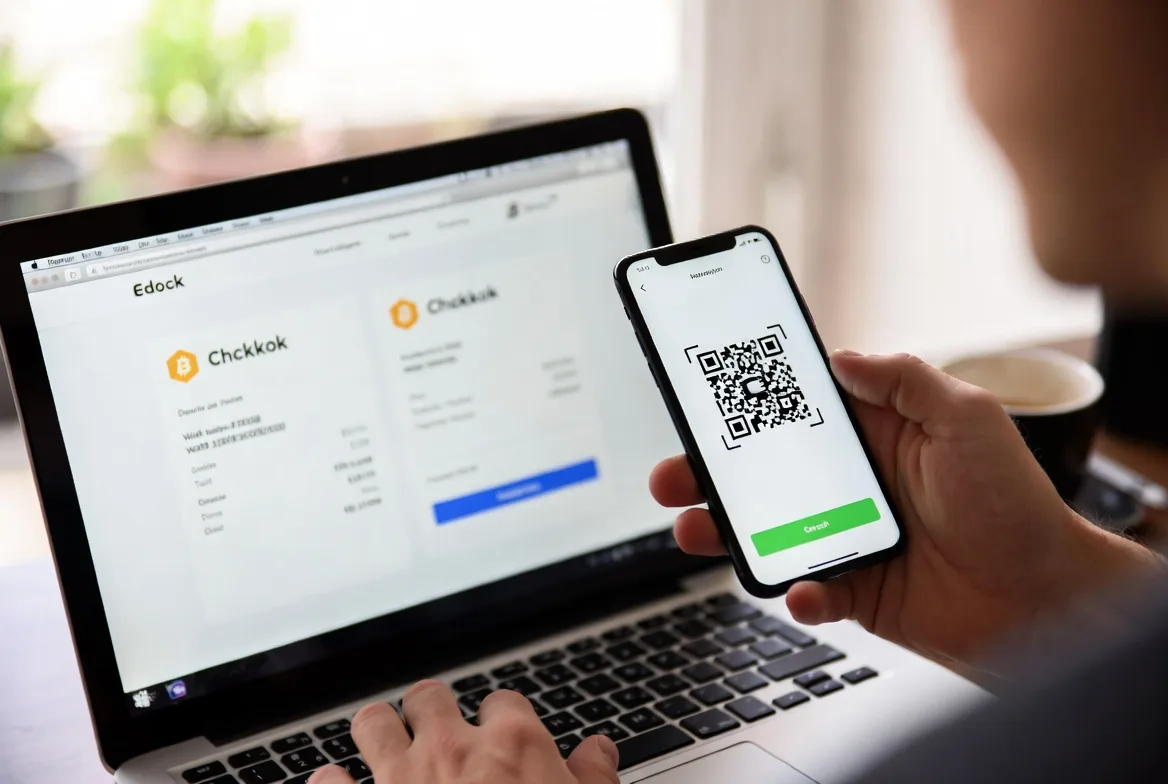
Here’s the play-by-play. Your customer hits checkout and picks cryptocurrency as their payment option. Your system—or more likely, your payment processor—spits out a wallet address (think of it as an account number that works only once) plus the exact amount needed in whatever crypto they’re paying with. Could be 0.0087 BTC, could be 547 USDC. The customer fires up their wallet app, hardware device, or browser extension and sends the payment to that address.
Now comes the interesting part. That transaction broadcasts across thousands of computers running the blockchain network. Miners (for Bitcoin) or validators (for Ethereum and newer networks) pick it up and add it to the next block. How businesses accept bitcoin depends heavily on how many confirmations they wait for. Bitcoin merchants typically want six confirmations before considering payment final—that’s roughly an hour. Solana confirms in literal seconds. Ethereum splits the difference at about four minutes for reasonable security.
You’ve got two fundamental choices for receiving these payments:
Direct acceptance puts you in the driver’s seat completely. You run wallet software, customers send crypto straight to addresses you control, and you manage everything—security, when to convert to cash, all the accounting. Full control means full responsibility. Your server gets hacked? That money’s gone forever, no FDIC insurance coming to save you.
Processor-mediated options hand the complexity to a third party. They catch the incoming crypto, watch for confirmations, and either deposit dollars to your bank or hold the cryptocurrency in accounts they manage. You integrate their API or install their plugin, and suddenly blockchain interactions happen behind the scenes. Most merchants take this route. The extra 1% fee beats dealing with private key management and security protocols yourself.
Crypto Payment Gateway Options and Processor Roles
Think of a crypto payment gateway as Stripe’s cousin—the technical infrastructure connecting your checkout to various blockchain networks. Except instead of talking to Visa, it’s monitoring Bitcoin confirmations and calculating real-time exchange rates.
These processors earn their fees by handling stuff you’d rather not touch: creating unique payment addresses for every transaction, tracking confirmations across different blockchains, managing secure wallet infrastructure, calculating cryptocurrency amounts from your dollar prices, and reconciling everything with your order system.
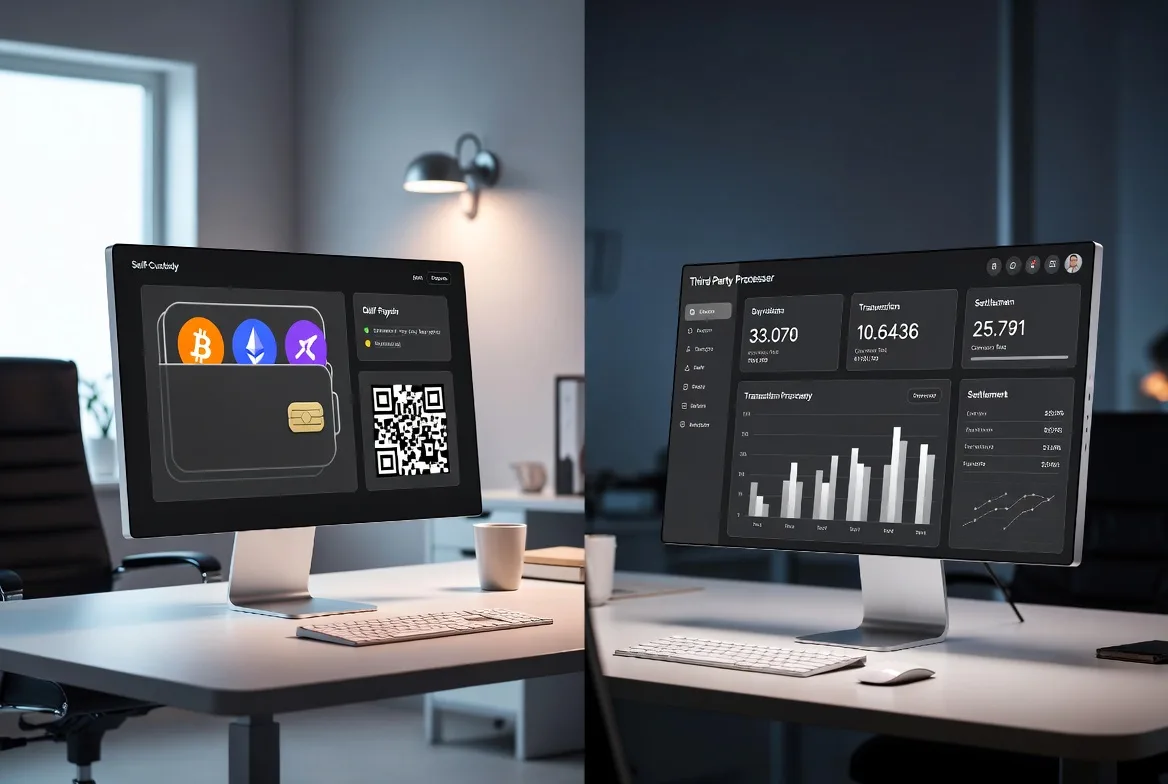
Direct Wallet Integration vs. Third-Party Processors
Running your own wallet means installing software like BTCPay Server on your infrastructure. You generate payment addresses from your own keys, monitor blockchains yourself, and pocket the crypto directly.
The upside? Zero processing fees except whatever the blockchain charges (network fees). Complete privacy—no third party sees your transactions. Total control over timing conversions to cash.
The downside? You need technical chops. Someone has to maintain the server, handle security updates, back up private keys correctly, and manage volatility risk for merchants since you’re holding the crypto. Plus you’re responsible if anything goes wrong. Server compromise means permanent loss.
Third-party services like BitPay, Coinbase Commerce, or CoinGate flip that equation. They charge 1-2% but give you a dashboard, automatic fiat conversion, customer support, and insurance in many cases. The technical requirements drop to “can you install a plugin?”
There’s a middle ground: self-hosted BTCPay Server. You get processor-like convenience without recurring fees, but you still need someone technical enough to deploy and maintain it. Better than raw wallet software, but definitely not plug-and-play.
What Crypto Payment Processors Handle for Merchants
Modern processors do way more than just catch incoming payments.
Exchange rate management happens in real-time. Rates refresh every few seconds, and when your customer starts checkout, the processor locks that rate for 10-15 minutes. Gives them time to complete the payment without the price changing mid-transaction.
Multiple cryptocurrency support comes standard. Accept Bitcoin, Ethereum, Litecoin, and a dozen stablecoins through one integration. The processor runs separate wallet infrastructure for each currency, so you don’t need to figure out how to operate an Ethereum node versus a Bitcoin node.
Instant settlement options convert crypto to dollars the moment confirmations complete. The processor uses their exchange connections to sell immediately, then queues up your bank deposit. Daily, weekly, monthly—whatever schedule you prefer. You never technically hold cryptocurrency, which eliminates all volatility exposure.
Reporting and compliance features generate the records your accountant needs. CSV exports, API access to transaction history, year-end summaries showing dollar values for tax purposes. Some even integrate directly with QuickBooks or Xero.
Fraud detection looks different for crypto than credit cards. Processors scan for suspicious patterns—payments from wallets flagged for criminal activity, potential double-spend attempts (sending the same coins to multiple addresses), and unusual transaction volumes that might indicate account takeover.
Setting Up Crypto Checkout on Your Ecommerce Store
Most merchants go live within an afternoon. The technical lift isn’t huge, especially on common platforms.
Shopify users have it easiest. Browse the App Store, install your processor’s app (BitPay, Coinbase Commerce, CoinGate all have them), connect your processor account, toggle on which cryptocurrencies you’ll accept. Takes maybe 20 minutes. The app handles everything else—adding crypto to checkout, displaying payment info, updating order status after confirmation.
WooCommerce setups work similarly. Grab the plugin from WordPress.org, install it, head to WooCommerce payment settings, paste in API credentials from your processor account. Configure whether you want instant conversion or to hold crypto. The plugin slots cryptocurrency in alongside your existing payment methods.
Custom platforms need actual development work. You’ll implement the processor’s REST API—create payment sessions, show payment details to customers, receive webhooks when payments confirm, update order status accordingly. Not rocket science, but plan for a developer day. Most processors provide SDKs for JavaScript, PHP, Python, Ruby to speed things up.
Testing before launch should cover these scenarios:
Make a real test purchase using testnet cryptocurrency (free test coins on test blockchains). Verify your orders update correctly after confirmation. Try the refund process to understand timing—how long does it take, what does your customer see? Abandon a payment halfway through and confirm your inventory system doesn’t break. Check that accounting software records the transaction properly.
Crypto checkout integration needs a few technical prerequisites. Your entire site must run HTTPS—processors require it. You need an endpoint that can receive webhooks (processor notifications about payment status). Ability to display QR codes helps mobile users scan-and-pay. Session management to track payment status while confirmations process.
Common mistakes? Fulfilling orders too quickly, before enough confirmations come through. Not telling customers how long confirmation takes, leading to support tickets. Inadequate testing of refund flows before a real customer wants one. Forgetting to account for blockchain network congestion that can slow confirmations during busy periods.
Managing Price Volatility and Currency Risk
Bitcoin swinging 10% in a day isn’t unusual. Ethereum moves even harder sometimes. This price instability tops the worry list for most merchants considering crypto.
Your exposure window starts when the customer sends payment and ends when you convert to dollars. Use instant conversion? That window lasts only minutes. Hold the crypto? Exposure continues until you decide to sell.
Instant conversion solves the volatility problem completely. Your processor automatically sells incoming crypto for dollars right after confirmation. The conversion uses their exchange access, and you receive exactly the dollar amount shown at checkout (minus their fee). Customer pays in Bitcoin, you never actually hold Bitcoin.
From your perspective, this makes crypto payments financially identical to credit cards. The dollar amount is fixed at checkout regardless of what happens to Bitcoin prices afterward.
Stablecoin merchant payments offer a different angle on risk management. USDC, USDT, and similar tokens maintain a $1.00 peg through various mechanisms—fiat reserves in bank accounts, collateralization with other crypto assets, or algorithmic supply adjustments. Accepting stablecoins gives you crypto’s advantages (speed, low fees, global reach) without the price roller coaster.
Trade-off: fewer customers hold stablecoins compared to Bitcoin or Ethereum. Though adoption has climbed sharply among crypto-native shoppers who want stability for daily spending.
Partial holding lets you speculate on upside while limiting downside. Configure your processor to instantly convert 80% to cash, keep 20% in crypto. You get some exposure to potential appreciation without betting your entire revenue on cryptocurrency price movements.
Hedging using derivatives works for sophisticated merchants comfortable with futures trading. You hold the Bitcoin you receive while simultaneously shorting Bitcoin futures on exchanges like CME or Binance. Price drops? Your futures position gains offset Bitcoin losses. Price rises? Bitcoin gains offset futures losses. Requires active management and derivatives trading knowledge—not for everyone.
For most merchants, instant conversion just makes sense. You capture crypto’s benefits without adding financial speculation to your business model.
Handling Refunds and Returns with Crypto Payments
Crypto refund mechanics get complicated because blockchain transactions can’t be reversed and prices never stop moving.
Customer wants a refund—now what? First decision: send cryptocurrency back, or refund in dollars?
Cryptocurrency refunds mean transmitting crypto to their original payment address. But how much? Same number of coins they sent, or a different amount reflecting current exchange rates? Say someone paid 0.01 BTC when Bitcoin traded at $65,000 (making their purchase $650). They request a refund when Bitcoin hits $70,000. Sending back 0.01 BTC gives them $700 worth—more than they paid. Refunding the dollar-equivalent ($650) means sending roughly 0.0093 BTC.
Most merchants refund based on dollar-equivalent. Treats cryptocurrency as a payment method, not the actual currency for accounting. Keeps refunds economically neutral.
Fiat refunds dodge the whole value-fluctuation mess. You refund the original dollar amount to their credit card or bank account, full stop. Cryptocurrency prices become irrelevant. Does require collecting backup payment info at checkout or processing refunds through different channels.
Technical implementation requires saving the customer’s original payment address from the blockchain transaction. You need that address to send crypto refunds back. Some processors automate refund transactions through their dashboard or API. Others require manual processing where you create the outgoing transaction yourself.
Policy decisions should cover several what-ifs:
What if cryptocurrency doubles between purchase and refund? Will you send back half as many coins (dollar-equivalent) or the same number of coins (giving them double the value)? What if the customer lost access to their original wallet—their phone died, they forgot their password, whatever? How long will you accept refund requests? Standard 30-day window, or shorter given volatility concerns?
Many merchants establish “refund matching original value” policies: cryptocurrency purchases get cryptocurrency refunds calculated to match the dollar amount at refund time. Similar to how you’d handle international credit cards where exchange rates shift between purchase and refund.
The technical process usually involves your processor creating an outgoing transaction to the customer’s wallet address. Shows up in their wallet after blockchain confirmation. Settlement time matches normal confirmation periods—minutes to hours depending on which cryptocurrency and how congested the network is.

Cross-Border Sales and International Crypto Payments
Cross-border crypto ecommerce cuts through a lot of friction that slows down international online sales.
Traditional international payments stack up fees fast: currency conversion (2-4% typically), international transaction fees (1-3%), correspondent bank fees, and 3-7 business day settlement delays. A customer in Germany buying from your US store pays in euros, their bank converts to dollars, routes through SWIFT, intermediary banks take their cut, and you get paid days later minus 5-8% total in fees.
Cryptocurrency payments skip that entire mess. German customer sends Bitcoin or USDC straight to your wallet or processor. Blockchain confirmation takes the same time whether they’re in Munich or Montana. No currency conversion needed if you transact in cryptocurrency, or conversion happens once (crypto to your local dollars) instead of twice (their euros to your dollars).
Settlement speed gets even better across borders. Cryptocurrency confirms on the same timeline from Tokyo or Texas—doesn’t matter. Bitcoin takes about 30-60 minutes for solid confirmation regardless of geography. Traditional international wires can take a week and cost $30-50 in fees by themselves.
Regional regulations vary wildly though. US lets merchants accept crypto legally, treating payments as property transactions for tax purposes. EU’s Markets in Crypto-Assets (MiCA) regulation created a comprehensive framework. China bans cryptocurrency transactions entirely. India allows holding crypto but restricts using it for payments heavily.
Before marketing aggressively to international customers, research crypto regulations in your target markets. Some countries require specific merchant licenses for accepting cryptocurrency. Others impose capital controls making crypto transactions illegal period, regardless of your compliance efforts.
Currency conversion elimination benefits customers as much as merchants. Japanese customer paying in Bitcoin doesn’t convert yen to dollars or pay forex spreads. They pay the same Bitcoin price whether USD/JPY exchange rates are favorable or not. This transparency reduces cart abandonment from surprise conversion fees.
Practical implementation for international sales requires minimal changes beyond standard crypto acceptance. Your processor handles customers globally through the same integration. Main consideration: pricing strategy. Display prices in cryptocurrency (exposing customers to volatility) or in their local currency (requiring real-time conversion at checkout)?
Most merchants display prices in the customer’s local currency, convert to cryptocurrency at checkout. Provides familiarity while offering crypto as an option.
Our data shows merchants implementing crypto payments during 2024-2025 found that roughly 15-20% of international customers now choose stablecoins over credit cards when given the option. They consistently cite lower fees and quicker settlement as primary reasons. The volatility fears that dominated merchant concerns five years ago have largely been addressed through instant conversion services and stablecoin adoption.
Sarah Chen, Director of Merchant Services, Digital Commerce Alliance
Real-World Considerations: Costs, Security, and Compliance
Transaction costs for cryptocurrency typically run 0.5% to 2% through a processor with instant conversion. Compare that to credit card processing at 2.5% to 3.5% plus $0.30 per transaction. Direct wallet acceptance eliminates processing fees entirely—you only pay blockchain network fees (currently $1-5 for Bitcoin, $2-15 for Ethereum depending on congestion, under $0.01 for stablecoins on newer networks).
The cost advantage grows on high-value transactions. A $5,000 purchase eats $125-175 in credit card fees versus $25-100 in crypto processing fees. For international transactions, the gap widens further because you’re not paying currency conversion fees.
Security requirements differ substantially from traditional payment security:
Never put private keys on internet-connected servers. Use hardware security modules or multi-signature wallets needing multiple approvals for outgoing transactions. Set withdrawal limits and time-locks on large transfers. Regularly audit wallet access logs for weird activity. Store offline backups of wallet recovery phrases in geographically separated secure locations—safe deposit boxes in different cities, for instance.
If using a processor, verify they maintain SOC 2 compliance and carry adequate insurance for custodied funds. Several processors have failed or gotten hacked over the years, resulting in total loss for merchants holding balances with them.
Tax reporting treats cryptocurrency payments as property transactions under current IRS rules. When crypto payment comes in, you report income equal to the dollar value at receipt time. If you later sell that crypto, you report capital gain or loss—the difference between what it was worth when you received it versus when you sold it.
Instant conversion simplifies this dramatically. You receive dollars, report dollar income, no subsequent capital gains to track. Holding cryptocurrency requires detailed records: receipt date, amount received, dollar value for every single transaction.
IRS requires Form 8300 for cryptocurrency payments exceeding $10,000, identical to cash transaction reporting requirements. Your processor should provide documentation supporting your tax filings.
Regulatory landscape across the United States remains fractured between federal agencies and state governments. SEC treats many cryptocurrencies as securities. CFTC treats them as commodities. FinCEN treats cryptocurrency businesses as money services businesses under Bank Secrecy Act requirements.
Most merchants accepting crypto through established processors don’t need additional licensing—the processor maintains necessary money transmitter licenses. Direct acceptance might trigger state licensing requirements in some jurisdictions though. Consult with a cryptocurrency-knowledgeable attorney before implementing direct acceptance at significant scale.
Anti-money laundering (AML) and know-your-customer (KYC) obligations generally fall on processors rather than merchants, though you should maintain standard customer identification practices. Don’t accept payments from sanctioned addresses or known criminal sources. Most processors screen transactions automatically and reject payments from flagged addresses.
Crypto Payment Processor Comparison
| Provider | Currencies Accepted | Fiat Auto-Convert | Processing Cost | Setup Complexity |
|---|---|---|---|---|
| BitPay | BTC, ETH, BCH, DOGE, LTC, USDC, GUSD, PAX, BUSD | Available | 1% per transaction | Simple (plugins available for Shopify, WooCommerce, Magento) |
| Coinbase Commerce | BTC, ETH, LTC, BCH, USDC, DAI | Not available (crypto deposits only) | 1% per transaction | Simple (hosted pages, straightforward API) |
| CoinGate | 70+ different cryptocurrencies | Available | 1% standard (2% for smaller volume merchants) | Simple (broad plugin support) |
| BTCPay Server | BTC, LTC, additional via plugins | Not available (self-custody model) | None (blockchain network fees only) | Complex (requires self-hosting, technical knowledge) |
| NOWPayments | 200+ different cryptocurrencies | Available | 0.5-1% depending on volume | Moderate (API integration necessary) |
FAQs
Not really. Modern processors hide blockchain complexity completely. You need baseline knowledge—crypto is digital money, transactions confirm on a blockchain, prices fluctuate—but you don’t need technical blockchain expertise any more than you need to understand ACH clearing systems to accept bank transfers. Pick a processor with solid documentation and customer support, and you’ll manage crypto payments about as easily as credit cards. The learning curve is gentler than you’d expect.
Using instant conversion? Nothing happens to you—your processor locks the exchange rate when payment initiates, and you receive the agreed dollar amount no matter what price does afterward. The processor absorbs volatility risk during the confirmation window. Accepting cryptocurrency directly without a processor? You’re exposed to price changes until you manually convert to fiat. This is why most merchants choose instant conversion.
Usually not when using a licensed payment processor. The processor holds necessary money transmitter licenses and handles regulatory compliance. Accepting cryptocurrency directly without a processor might require money transmitter licensing in certain states depending on your transaction volume and business structure. Federal requirements stay minimal for merchants (unlike exchanges or custodians). Consult a lawyer familiar with cryptocurrency regulations in your state if implementing direct acceptance or processing substantial volume.
Cryptocurrency payments evolved from experimental technology into practical commerce infrastructure. Modern payment processors deliver merchant-friendly tools eliminating technical complexity and volatility risk while preserving cryptocurrency’s core advantages: lower fees, faster settlement, and global reach without banking intermediaries.
Whether to accept crypto depends on your customer base, international sales volume, and comfort with innovation. Businesses selling digital goods, serving international customers, or operating in industries with high credit card processing fees see the most immediate value. The implementation barrier sits low enough that testing cryptocurrency acceptance requires minimal investment while generating useful data about customer preferences.
Start with a reputable processor offering instant fiat conversion, accept Bitcoin plus a stablecoin, and track adoption over several months. You’ll quickly determine whether crypto payments deliver meaningful value for your specific business without committing to complex infrastructure or financial risk.