
What Are Crypto Derivatives and How Do They Work
Think of crypto derivatives as side bets on Bitcoin’s price—you never touch actual coins, but your profits and losses mirror price swings just the same. Instead of buying and storing digital currency, you’re signing contracts with other traders about where prices will go.
Here’s the ownership distinction that matters: buy Bitcoin on Coinbase’s spot market and those coins hit your wallet within minutes. You control private keys. You decide when to sell. But open a Bitcoin derivative position? You’re holding a contract—a financial claim tied to Bitcoin’s value, not Bitcoin itself. The underlying cryptocurrency stays wherever it was. You’ve just entered an agreement about its future price.
Now leverage enters the picture and changes everything. Say you’ve got $2,000 sitting in a derivatives account offering 15x leverage. That lets you control $30,000 worth of Bitcoin exposure. When Bitcoin climbs 4%, you’re not making 4% on your $2,000—you’re making 4% on the full $30,000 position, which is $1,200 profit. That’s a 60% gain on your actual capital. Flip that scenario: Bitcoin drops 4% and you’ve just lost $1,200, more than half your account balance, in one move.
Exchanges don’t let you lose money you don’t have, which is where collateral rules come in. Your account needs to maintain minimum margin levels at all times. Losses push you below that threshold? The platform automatically closes your entire position—liquidation happens instantly, no warnings sent, no second chances. This protects exchanges from traders owing them money, but it also means volatile days can wipe out your positions before you’ve finished your morning coffee.
Why do traders accept these risks? Three main reasons. First, you can profit when prices fall by shorting—impossible with regular crypto holdings unless you’re borrowing coins. Second, leverage gives you meaningful exposure even with limited capital. Third, you skip the whole custody headache of storing private keys and worrying about hardware wallet failures.
Main Types of Crypto Derivatives
Three contract types dominate crypto derivatives markets, each solving different trading problems.
Crypto Futures Contracts
A futures contract locks both sides into an agreement: you’ll settle the position at a specific price when the calendar hits the expiration date. Let’s say you buy one Bitcoin futures contract at $87,000 expiring April 30th. Come April 30th, if Bitcoin trades at $92,000, you’ve made $5,000. The trader on the other side—who sold you that contract—loses $5,000. Neither party can walk away early unless someone else takes over the position.
Settlement happens two ways. Cash settlement means the exchange calculates the price difference and credits or debits accounts in dollars or USDT—no Bitcoin moves anywhere. Physical settlement actually requires delivering real Bitcoin, though most traders close positions before this happens to avoid the logistics.
CME runs monthly and quarterly cycles. Their March contract wraps up the last Friday of March. June contract? Last Friday of June. Want to maintain exposure past expiration? You’ll need to close the expiring contract and open the next month—this “rolling” process costs money because March and June contracts rarely trade at identical prices.
Expiration mechanics impact pricing because futures prices must converge toward spot prices as settlement approaches. A futures contract trading $1,500 above Bitcoin’s spot price in January will slowly narrow that gap through February and March, finally matching spot price within cents by expiration day.
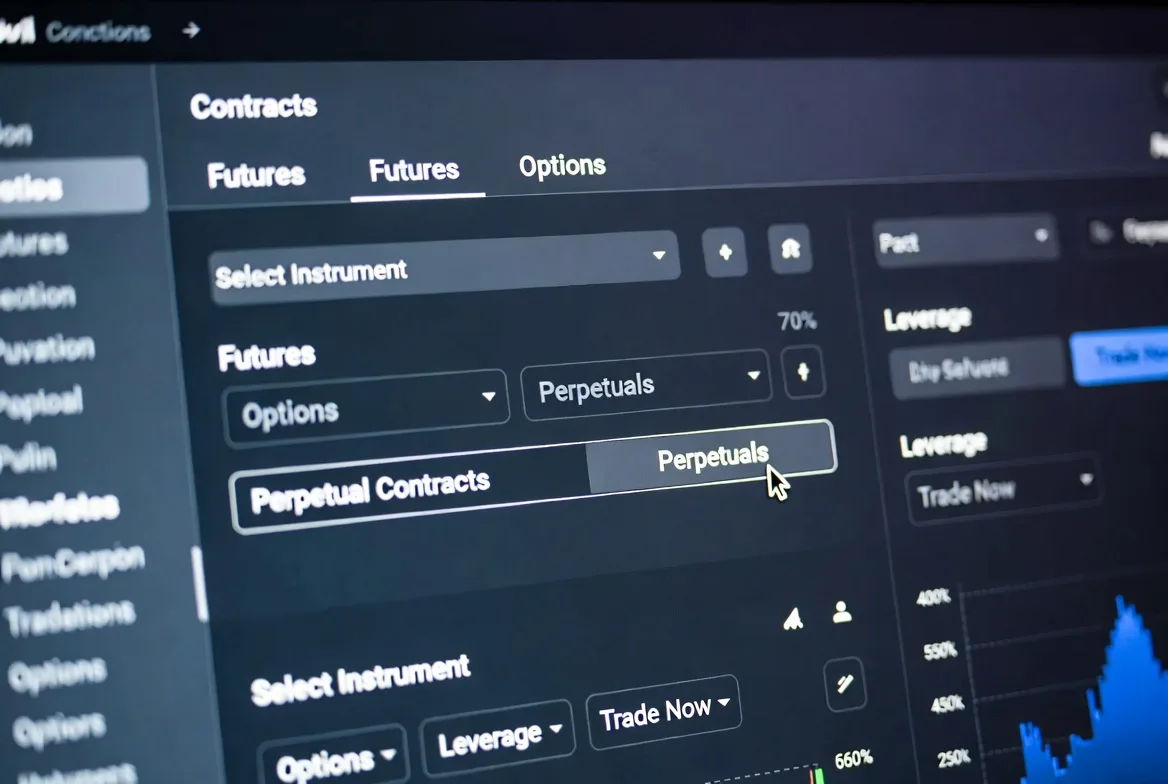
Crypto Options Explained
Options split the obligations unevenly—the buyer gets to choose what happens, while the seller must comply if the buyer exercises. This creates completely different risk profiles than futures.
Call options give you the right to buy Bitcoin at a predetermined strike price. Purchase a $95,000 strike call and watch Bitcoin soar to $108,000 before expiration. You can exercise that option, “buying” Bitcoin at $95,000 and immediately selling it at market prices for $108,000—that’s $13,000 profit per contract. Put options work backwards: you get the right to sell Bitcoin at the strike price, profiting when markets crash below your strike.
Buyers pay premiums upfront representing their maximum possible loss. Spent $3,500 on a call option and Bitcoin never reaches your strike? The option expires worthless and you’re out $3,500—painful, but contained. Option sellers receive that premium as income but face uncapped losses if markets move hard against them. Sell a call at $95,000, watch Bitcoin rocket to $125,000, and you’re liable for $30,000 per contract.
Strike price selection becomes its own strategic decision. Pick a strike near Bitcoin’s current price (at-the-money) and you’ll pay higher premiums, but the option responds quickly to small price moves. Choose a strike far from current prices (out-of-the-money)—maybe a $110,000 call when Bitcoin trades at $88,000—and your premium costs drop dramatically, but Bitcoin needs a substantial rally before you profit. In-the-money strikes already hold intrinsic value and behave similarly to leveraged spot positions.
Time decay—theta in options terminology—eats away at option value every day that passes. A 45-day option worth $2,800 might hold only $900 with five days left if Bitcoin hasn’t moved meaningfully. This erosion accelerates viciously in the final week, making short-dated options terrible purchases unless you’re absolutely certain about immediate price action.
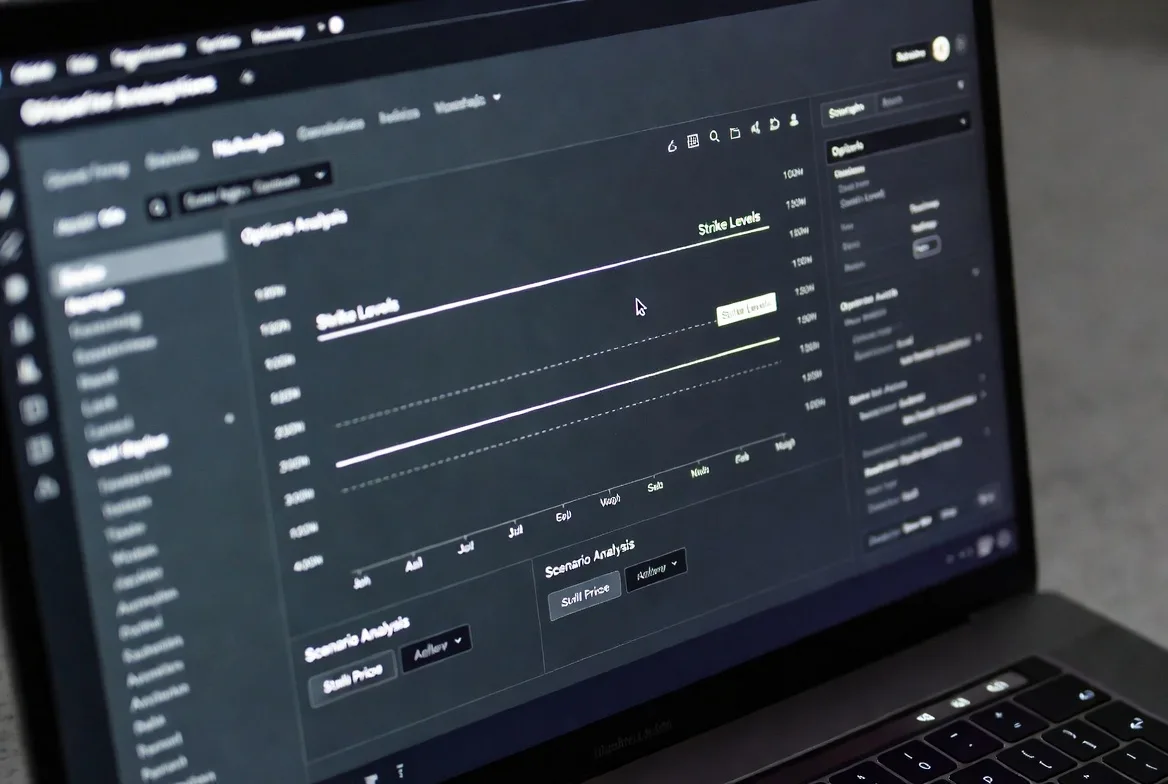
Perpetual Swaps
Perpetuals threw out expiration dates entirely, solving the rolling problem that frustrated futures traders. These instruments track spot markets through a clever funding rate mechanism instead of expiration-driven convergence.
Here’s how funding works: every eight hours (standard across most platforms), long and short position holders exchange payments based on the gap between perpetual and spot prices. Perpetuals trading above spot? Long position holders pay shorts. Perpetuals below spot? Shorts pay longs. These regular transfers incentivize arbitrage traders to close any pricing gaps that develop.
Market sentiment shows up clearly in funding rates. Bull markets create crowded long positions, pushing perpetual prices above spot and generating positive funding rates—0.03% every eight hours means long traders pay roughly 33% annualized to maintain positions. Bear markets flip this: negative funding means shorts pay longs for their positions. Extreme volatility can spike rates past 0.30% per interval, costing highly leveraged traders thousands daily in funding expenses.
The beauty of perpetuals lies in indefinite holding periods. Want to keep a long position open for eight months? No rolling required, no expiration to worry about. Just remember funding costs accumulate—if rates stay elevated, you might’ve been better off paying the basis on quarterly futures and rolling three times.
Bitcoin Futures vs Options – Key Differences
These two instruments serve overlapping but distinct purposes, and choosing correctly matters for both strategy and survival.
| Feature | Bitcoin Futures | Bitcoin Options |
|---|---|---|
| Obligation | Both counterparties must settle at expiration | Buyer holds the right; seller must comply if exercised |
| Maximum Loss | Extends to your liquidation threshold based on leverage | Limited to premium paid (buyers); unlimited exposure (sellers) |
| Profit Ceiling | Unlimited in your direction; symmetric risk/reward | Unlimited for call buyers; capped at strike minus premium for puts |
| Learning Curve | Intermediate—requires margin and leverage understanding | Steep—demands grasp of Greeks, time decay, volatility |
| Upfront Capital | Margin requirement of 5-10% of total notional exposure | Complete premium payment required at purchase |
| Best Used For | Directional bets, portfolio hedges with leverage | Defined-risk speculation, volatility plays, complex spreads |
Futures demand constant margin vigilance. Bitcoin drops 8% while you’re running 12x leverage on a long position? You’re getting liquidated unless you’ve added margin. Options buyers never face liquidation risk—their maximum loss is baked in from the start, letting them ignore hourly price swings.
Capital deployment works differently too. Opening a $50,000 Bitcoin futures position might require $5,000 margin at 10x leverage. That same exposure through call options could cost $4,000-$6,000 in premium for 30-day contracts, depending on volatility levels. The futures route looks cheaper initially, but remember your margin can evaporate as prices move against you—option premium is spent and gone, but so is your liquidation risk.
Hedging reveals where each instrument excels. A mining company holding 25 Bitcoin can short 25 Bitcoin futures, locking in today’s price regardless of where markets go over the next three months. Options create asymmetric hedges—buying puts protects against crashes while preserving upside if Bitcoin rallies, though premium costs eat into overall returns.
How Crypto Derivatives Are Priced
Derivative pricing extends well beyond just checking Bitcoin’s spot price and calling it close enough.
Basis represents the spread between futures and spot prices. Positive basis—futures trading above spot—signals market expectations of higher prices ahead or reflects carry costs for maintaining positions. Check CME’s quarterly Bitcoin futures and you’ll typically find 8-18% annualized basis during stable markets. Crypto-native exchanges often show wider basis during bull runs when traders pile into long positions with high leverage.
Funding rates do the same job for perpetuals that basis does for futures. Sustained positive funding around 0.04% per eight-hour interval (about 44% annualized) indicates too many long positions—often a contrarian signal that precedes corrections. Negative funding shows heavy short positioning, common during bear markets or after sharp drops.
Mark price versus last traded price prevents manipulation-driven liquidations. Exchanges calculate index prices by averaging spot rates from Coinbase, Kraken, Bitstamp, and other major platforms. The mark price combines this index with funding adjustments. Your liquidation triggers based on mark price, not whatever random trade just printed on the derivatives exchange. This protection saved countless traders during flash crash events where a single exchange’s spot price temporarily dislocated from broader markets.
Implied volatility drives option pricing through Black-Scholes models and their variants. High implied volatility expands premium costs because there’s greater probability of large price swings that put options in-the-money. After volatility collapses—say, following a long-anticipated event that finally occurred—those same options lose value even if spot prices haven’t budged. This “volatility crush” has burned many traders who bought expensive options ahead of events like ETF approvals or halvings that failed to generate expected volatility.
Theta acceleration hits hardest in final days before expiration. Options typically lose about one-third of their remaining time value during the last week, assuming spot prices and volatility stay constant. This makes buying options with three days left incredibly expensive relative to their profit probability, though selling ultra-short-dated options concentrates enormous risk into compressed timeframes.
Crypto Derivative Market Size and Institutional Adoption
Derivatives absolutely dwarf spot trading volumes—and the gap keeps widening. Throughout 2026, daily derivative volume across major platforms regularly hit $180-220 billion, while spot markets did $70-90 billion. That’s roughly a 2.5:1 ratio. Leverage multiplication explains much of this—a trader cycling through five 10x leveraged positions in a day generates far more nominal volume than a spot trader making five unleveraged purchases.
CME Group owns the regulated US derivatives landscape. Their Bitcoin and Ethereum futures maintain combined open interest above $16 billion as of early 2026, with daily trading volumes averaging $9-13 billion. Add in CME’s Bitcoin options—which draw substantial institutional interest—and you’re looking at the primary venue for compliance-focused participants who can’t touch offshore platforms.
Institutional participation completely transformed between 2023 and 2026. Early institutional money focused on CME’s cash-settled futures precisely because they avoided custody complications—treasurers didn’t need to explain Bitcoin wallet security to risk committees. Then spot Bitcoin ETFs launched in January 2024, offering institutions a simpler passive exposure route. Yet derivatives remained critical for hedge funds executing market-neutral strategies, options market makers, and corporate treasurers hedging Bitcoin holdings.
Regulatory frameworks improved but retain significant gaps. CFTC governs commodity derivatives, giving clear jurisdiction over Bitcoin and Ethereum futures. SEC jurisdiction over tokens potentially classified as securities creates ongoing uncertainty—no one knows definitively whether certain altcoin derivatives fall under CFTC or SEC authority. This ambiguity pushed most offshore exchanges to block US users entirely from derivative products, funneling American traders toward CME, Coinbase’s institutional derivatives, and a handful of smaller regulated venues.
Traditional finance firms entered cautiously through regulated gateways. Multiple bulge bracket banks now facilitate CME Bitcoin futures trading for qualified institutional clients. Prime brokers built out crypto derivatives services, offering leverage and custody infrastructure to hedge funds. This institutional plumbing matured substantially, though retail traders on crypto-native platforms still generate the majority of overall derivative volume.
Trading Mechanics and Platform Features
Opening derivative positions follows different workflows than spot trading, with more room for expensive mistakes.
Margin deposits fund your derivative trading account. Platforms typically accept USDT, USDC, Bitcoin, or Ethereum as collateral. Cross-margin mode pools your entire account balance behind all positions—maximum capital efficiency, but one bad trade can liquidate everything you’ve got. Isolated margin assigns specific collateral to individual positions, capping your maximum loss at that allocation. New traders should default to isolated margin until they truly understand liquidation mechanics.
Position sizing calculations determine your actual market exposure. Deposit $4,000, select 12x leverage, and open a Bitcoin perpetual long at $86,000. You’re now controlling 0.558 Bitcoin worth $48,000 notional value. Your liquidation price sits roughly 8.3% below entry ($79,000-ish), though exact calculations factor in trading fees and funding rate projections.
Order types provide execution flexibility with important tradeoffs. Market orders execute instantly at whatever price is available—great for entering positions quickly, terrible during volatility when slippage can hit 1-2%. Limit orders specify your exact desired entry price but might never fill if the market doesn’t reach your level. Stop-loss orders become market or limit orders once price hits your stop threshold, automating risk management but introducing execution risk during fast-moving markets.
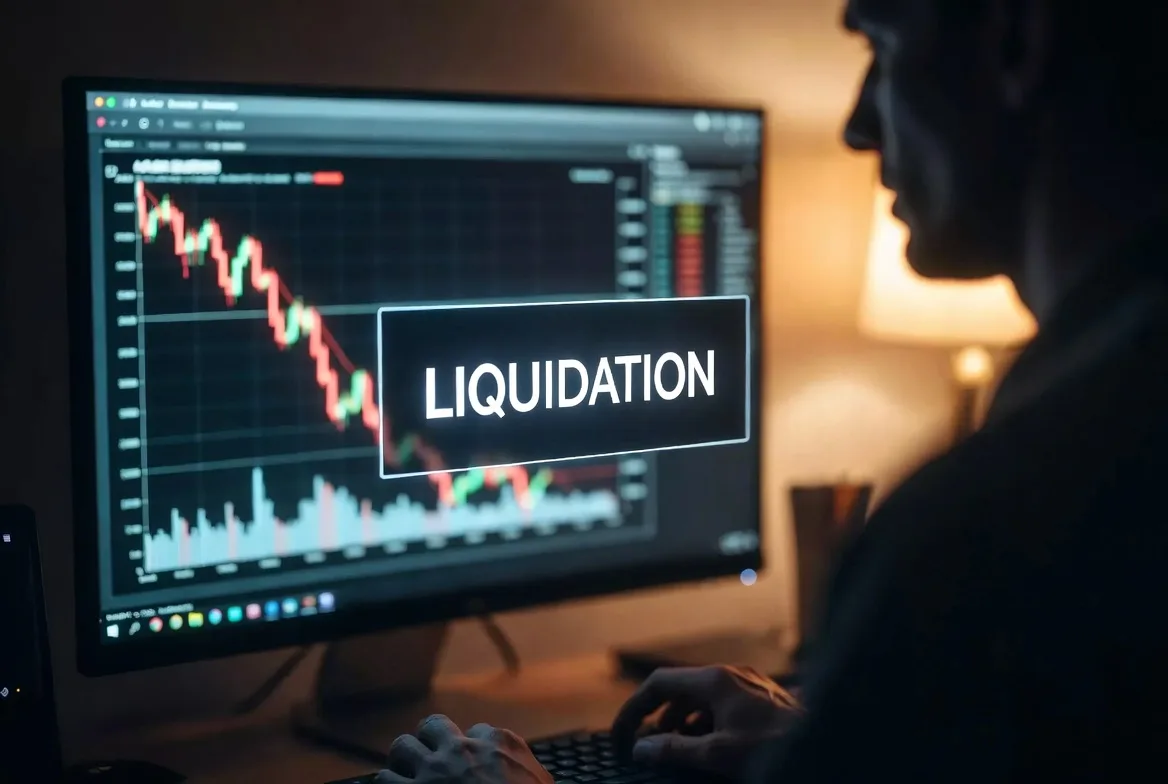
Liquidation triggers when mark price reaches your threshold, and it happens brutally fast. Exchanges often use partial liquidation first—reducing your position size to bring margin back above requirements. If price keeps moving against you, full liquidation wipes the entire position. Liquidation engines prioritize protecting the exchange’s insurance fund that covers negative balances. During extreme volatility, liquidation cascades develop where one forced closure pushes prices enough to trigger additional liquidations in a feedback loop.
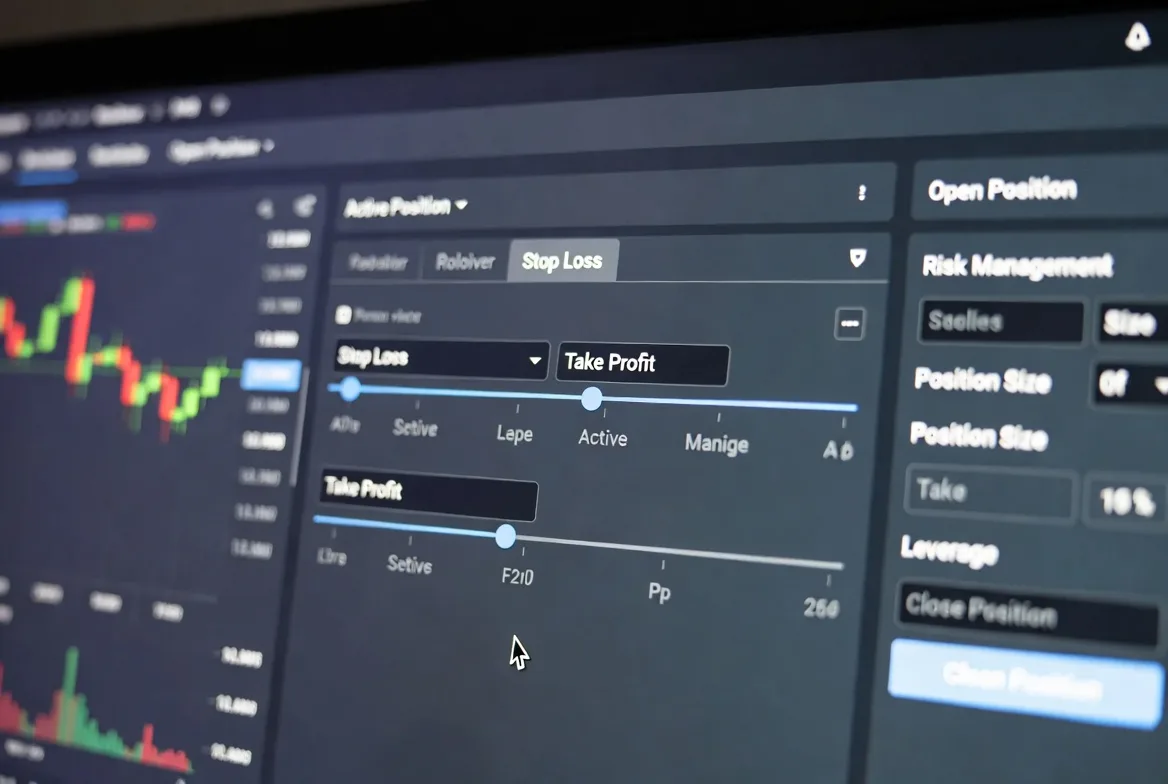
Risk management tools separate surviving traders from blown-up accounts. Take-profit orders automatically close winning positions when they hit your target. Trailing stops lock in gains by moving your stop-loss as prices move favorably—if Bitcoin rallies from $86,000 to $94,000 on your long, a trailing stop might move from your initial $84,000 to $91,000, protecting most gains if price reverses. Position calculators show exact liquidation prices before you enter trades—use them religiously.
Risks of Trading Crypto Derivatives
Derivatives introduce hazards that simply don’t exist in spot markets, and leverage magnifies every single one.
Liquidation risk tops the danger hierarchy by a wide margin. Running 15x leverage means a 6.7% adverse price move eliminates your position entirely. Bitcoin’s flash crashes—those violent drops followed by rapid V-shaped recoveries—have liquidated thousands of traders who would’ve been fine holding spot. Your position doesn’t benefit from the bounce because it stopped existing during the crash. You’re just gone.
Leverage warps trader psychology in predictable ways. Controlling $80,000 of Bitcoin exposure with $4,000 feels like free money when the position moves your way. You made $2,000 in an hour! Then a 5% reversal vaporizes your account overnight. Traders consistently overestimate their ability to react during volatile periods—you won’t be able to add margin or close positions fast enough when liquidation comes, especially during network congestion or when the exchange’s servers are lagging.
Counterparty risk persists despite insurance funds. FTX, Celsius, and several other derivatives platforms collapsed between 2022-2024, taking user funds into bankruptcy proceedings. Even in 2026, using platforms without proof-of-reserves, regulatory oversight, or adequate insurance funds exposes you to insolvency risks that self-custodied spot holdings completely avoid. Some exchanges have better insurance than others—do your research.
Funding rate expenses accumulate silently until you check your account balance and wonder where your profits went. Maintaining a perpetual long during a strong bull market might cost 0.04% every eight hours—about 44% annualized. Over six weeks, you’re paying 5% of your position size in funding even if Bitcoin’s price hasn’t changed. Many traders ignore funding rates completely until noticing their position value declining despite favorable price movement.
Regulatory uncertainty remains elevated for US-based participants. Platforms can restrict US access with minimal notice, forcing you to close positions at unfavorable times—ask anyone caught in positions when Binance and BitMEX suddenly blocked US users. Tax treatment of derivative profits gets complex: Section 1256 contracts like CME futures receive favorable 60/40 long-term/short-term treatment, but contracts on crypto-native exchanges follow different rules. Ambiguous IRS guidance creates compliance exposure that won’t surface until audit time.
Complexity overwhelms newcomers consistently. Understanding how leverage, margin types, funding rates, liquidation thresholds, and order execution interact requires experience most beginners lack. The learning curve is steep, and education through real money losses gets expensive quickly. Paper trading helps but doesn’t replicate the emotional pressure of watching your actual capital evaporate in minutes. Start with tiny position sizes—seriously, treat your first twenty derivative trades as paid education.
The biggest mistake traders make with crypto derivatives is treating leverage as a way to make more money rather than a tool to achieve capital efficiency. Leverage doesn’t increase your edge—it just magnifies both your skill and your mistakes.
Sarah Chen
FAQs
Yes, but with major restrictions around which platforms you can use. CFTC-regulated Bitcoin and Ethereum futures and options are fully legal through CME Group and select approved venues. International exchanges like Binance, Bybit, and OKX block US users from their derivative offerings due to regulatory uncertainty around whether they need SEC or CFTC registration. US traders access derivatives through compliant domestic platforms—CME being the largest—though product selection is more limited than what international traders enjoy.
The core difference is expiration. Traditional futures expire on set calendar dates (monthly or quarterly schedules), forcing traders to close positions or roll into the next contract. Perpetuals never expire—you can hold positions indefinitely. Perpetuals use funding rate payments between longs and shorts every eight hours to keep prices aligned with spot markets, while futures prices naturally converge toward spot as expiration approaches. Perpetuals suit traders wanting ongoing exposure, but cumulative funding costs during strong trends can exceed the basis costs of rolling quarterly futures.
Platforms set minimums ranging from $100 to $1,000 typically, but effective risk management suggests starting with at least $5,000-$10,000. Smaller accounts force you into excessive leverage to generate meaningful returns, dramatically increasing liquidation probability. With $500, even 5x leverage gives you a $2,500 position that liquidates after a 20% adverse move—far too easy during normal crypto volatility. More capital lets you use lower leverage, giving positions room to survive temporary drawdowns.
On most crypto platforms, no—liquidation engines close positions before accounts go negative, and insurance funds typically cover any remaining losses. However, during extreme volatility or platform failures, accounts have gone negative, with some venues attempting to collect those losses from users. CME and regulated exchanges maintain robust insurance funds that absorb negative balances. Always verify a platform’s negative balance protection policy before depositing funds—this protection varies significantly between venues.
CME Group provides regulated Bitcoin and Ethereum futures and options available to US traders through futures brokers. Coinbase offers derivative products to eligible customers meeting specific net worth and sophistication requirements. Several smaller CFTC-registered platforms provide limited derivative products. The major international exchanges—Binance, Bybit, OKX, and others—prohibit US users from accessing their derivative offerings, though some US traders use VPNs to circumvent these restrictions (at considerable legal and financial risk).
No, you don’t need to own any Bitcoin at all. Derivatives are contracts referencing Bitcoin’s price movements, not the asset itself. You can trade Bitcoin futures, options, or perpetuals using USD, USDT, USDC, or even other cryptocurrencies as margin collateral. This separation from the underlying asset is fundamental to derivatives—many traders prefer this approach because it avoids custody responsibilities, wallet security concerns, and the logistics of transferring actual Bitcoin between platforms.
Crypto derivatives deliver sophisticated instruments for speculation, hedging, and gaining capital-efficient price exposure without holding actual cryptocurrency. Futures contracts, options strategies, and perpetual swaps each fill distinct niches—from perpetuals’ straightforward leveraged positioning to options’ asymmetric risk profiles that limit downside while preserving upside.
The explosive growth in derivatives markets—now exceeding spot volumes by more than 2:1—demonstrates both institutional adoption and retail appetite for leveraged products. Regulated venues like CME coexist alongside crypto-native exchanges, though US traders face a fragmented landscape requiring balance between regulatory compliance and market access.
Mastering derivatives means understanding mechanics absent from spot trading: funding rate dynamics, liquidation cascades, theta decay, and margin management under pressure. The leverage that makes derivatives attractive also renders them brutally unforgiving. A spot trader buying Bitcoin at $86,000 can weather 35% drawdowns and wait months or years for recovery. A derivative trader running 10x leverage faces liquidation after a 10% adverse move and never participates in subsequent rebounds.
For traders investing serious time mastering these instruments and implementing disciplined risk management, derivatives unlock strategies impossible with spot trading—true portfolio hedging, directional speculation with defined risk, volatility trading, and capital efficiency that lets smaller accounts gain meaningful exposure. For those unprepared for the complexity and unwilling to accept the risks, derivatives provide an efficient mechanism toward rapid account destruction.
The instruments themselves are neutral tools—outcomes depend entirely on the skill, discipline, and risk management of whoever’s wielding them.