
What Are Crypto Custody Solutions and Why They Matter
Crypto custody solutions are specialized services and technologies designed to securely store, manage, and safeguard digital assets on behalf of institutions, funds, and high-net-worth individuals. Unlike traditional banking, where custodians hold securities in centralized depositories, crypto custody requires protecting private cryptographic keys—the only means to authorize transactions on a blockchain.
The core problem these solutions solve is straightforward: losing access to private keys means permanently losing access to assets. No central authority can reverse blockchain transactions or recover lost keys. For institutions managing client funds or corporate treasuries holding millions in digital assets, this creates unacceptable operational and fiduciary risk.
Self-custody—where individuals or organizations manage their own keys—works for retail users willing to accept personal responsibility. Institutional crypto vaulting demands something different: segregated accounts, audit trails, insurance backing, regulatory compliance, and operational controls that prevent both external theft and internal fraud.
A pension fund cannot simply store Bitcoin on a hardware wallet in a safe. It needs documented procedures, multiple approval layers, regular third-party audits, and insurance coverage that satisfies board governance requirements and regulatory expectations.
How Enterprise Crypto Custody Technology Works
Enterprise crypto custody relies on several distinct technical architectures, each with different security models and operational trade-offs. Understanding these technologies helps institutions match custody solutions to their specific risk tolerance and liquidity needs.
Air-Gapped Cold Storage Systems
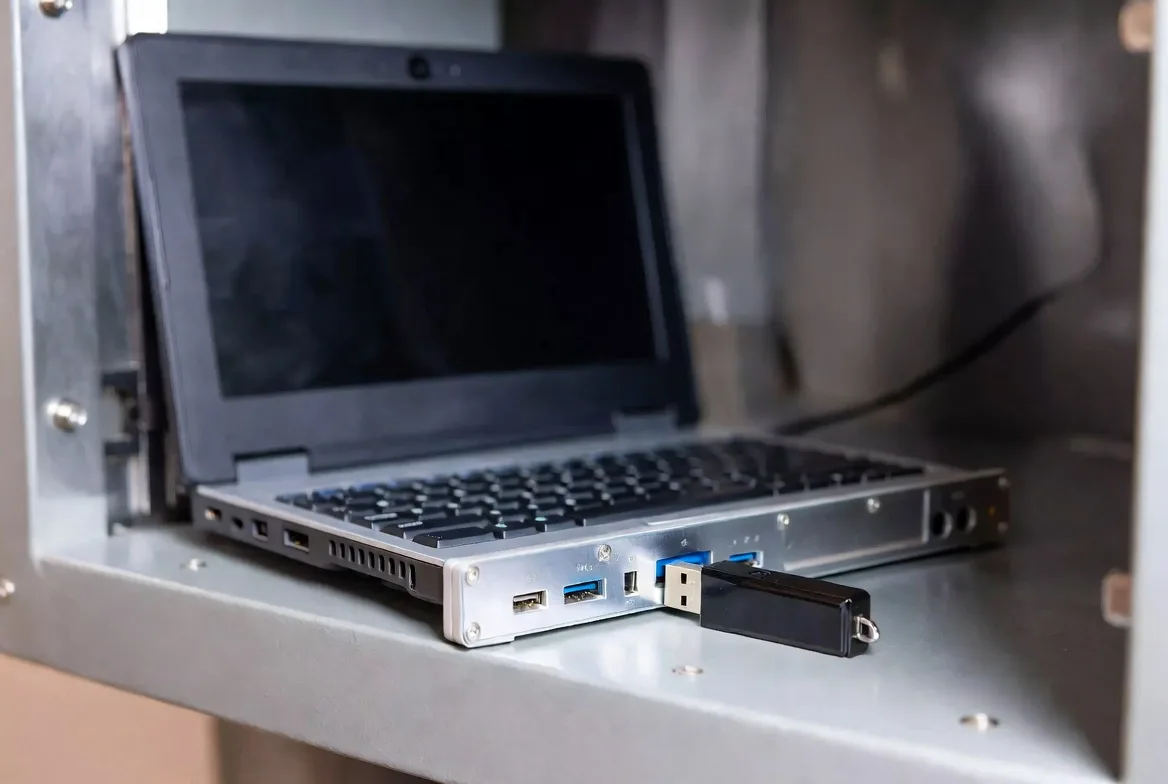
Air-gapped cold storage keeps private keys on devices completely isolated from any network connection. These systems generate and store keys on hardware security modules (HSMs) or purpose-built devices that never touch the internet.
Transaction signing happens offline. When an institution needs to move assets from cold storage, operators manually transfer unsigned transaction data to the air-gapped device via QR codes or USB drives, obtain signatures, then broadcast the signed transaction from a separate internet-connected machine.
This creates exceptional security—attackers cannot remotely compromise keys that exist only on offline hardware locked in bank vaults. The trade-off is speed. Cold storage withdrawals typically require 24 to 72 hours because they involve physical access controls, multiple authorization steps, and manual verification procedures.
Financial institutions holding long-term reserves commonly keep 90-95% of assets in air-gapped cold storage, maintaining only operational liquidity in faster but slightly less secure systems.
Multi-Party Computation Custody and MPC Wallets
Multi-party computation custody eliminates the concept of a single complete private key existing anywhere. Instead, MPC protocols split key material into mathematical shares distributed across separate servers or organizations. No individual share reveals anything about the private key.
When signing a transaction, these distributed parties run a cryptographic protocol that collectively produces a valid signature without ever reconstructing the complete key. An MPC wallet explained simply: three different servers each hold partial key information, and any two must cooperate to authorize a transaction—but even if an attacker compromises one server, they gain nothing usable.
This technology enables faster withdrawals than air-gapped cold storage while maintaining strong security. Many enterprise crypto custody providers now use MPC for “warm storage”—assets that need to move within hours rather than days, but don’t require the instant access of hot wallets.
MPC also eliminates single points of failure. Traditional cold storage might keep backup keys in multiple geographic vaults, but each backup is a complete key that could theoretically be stolen. MPC shares are cryptographically useless in isolation.

Hot Wallets vs. Cold Storage Trade-offs
Hot wallets maintain private keys on internet-connected servers, enabling immediate transaction signing for trading, staking, or customer withdrawals. Exchanges use hot wallets to provide instant liquidity, accepting higher risk for operational necessity.
The security versus accessibility spectrum runs from air-gapped cold storage (maximum security, slowest access) through MPC warm storage (balanced) to hot wallets (minimum friction, highest exposure). Sophisticated custody architectures use all three tiers, automatically moving assets between them based on anticipated liquidity needs and threat models.
A common mistake is treating this as a binary choice. Effective crypto custody technology employs defense in depth: cold storage for reserves, MPC for planned operational flows, hot wallets only for amounts that must move within minutes, and automated systems that rebalance across tiers as usage patterns change.
Types of Institutional Crypto Custody Models
Institutions can structure custody relationships in several ways, each with different regulatory implications, operational control, and cost profiles.
| Custody Model | Security Level | Control | Regulatory Status | Typical Use Case |
|---|---|---|---|---|
| Direct Custody | Highest (self-managed) | Full | Must obtain own licenses | Large banks, trust companies with internal capability |
| Third-Party Custodian | High (delegated to specialist) | Limited operational control | Custodian holds licenses | Investment funds, corporate treasuries |
| Sub-Custody | Varies by arrangement | Shared between prime custodian and sub-custodian | Complex multi-party compliance | Global institutions using local sub-custodians |
| Hybrid | Tiered based on asset allocation | Partial (some self-custody, some delegated) | Mixed regulatory requirements | Sophisticated firms balancing cost and control |
Direct custody means the institution itself operates the custody infrastructure—hiring specialists, obtaining regulatory approvals, purchasing HSMs, and maintaining security operations. Only the largest financial institutions pursue this path because the fixed costs run into millions annually.
Third-party custodians like Coinbase Institutional, Fidelity Digital Assets, and BitGo provide turnkey custody services. The institution opens a segregated account, deposits assets, and relies on the custodian’s security infrastructure and regulatory licenses. This shifts technical risk to the custodian but introduces counterparty risk and requires trusting the custodian’s operational security.
Sub-custody crypto arrangements involve a prime custodian contracting with specialized sub-custodians to hold assets in specific jurisdictions or for particular asset types. A US-based fund might use a primary custodian that delegates actual key management to regional sub-custodians with local regulatory expertise. This adds operational complexity but can solve jurisdictional licensing challenges.
Hybrid models keep highly liquid trading assets in third-party custody for speed while maintaining long-term holdings in direct cold storage. This requires careful governance to manage asset movements between custody tiers and maintain clear audit trails across multiple systems.
Regulated Crypto Custody and Compliance Requirements
The US regulatory landscape for crypto custody has matured significantly since early experiments. Institutions must navigate overlapping federal and state requirements that treat digital assets differently depending on asset classification and business model.
FinCEN classifies most crypto custodians as money services businesses, requiring registration, anti-money laundering programs, suspicious activity reporting, and customer due diligence. Custodians must implement transaction monitoring, screen against sanctions lists, and maintain records documenting the source of deposited funds.
State-level regulation varies dramatically. New York’s BitLicense imposes stringent capital requirements, cybersecurity audits, and operational standards. Wyoming and South Dakota created special-purpose depository institution charters specifically for digital asset custody, allowing qualified custodians to operate under bank-like regulatory supervision without full banking powers.
The SEC’s custody rule under the Investment Advisers Act requires registered investment advisers to use “qualified custodians” for client assets. While the SEC has not definitively classified all digital assets as securities, advisers managing crypto portfolios increasingly seek custodians with trust charters or other regulatory status to satisfy this requirement and avoid enforcement risk.
Regulated crypto custody providers typically maintain SOC 2 Type II attestations demonstrating controls around security, availability, processing integrity, confidentiality, and privacy. These annual audits by independent accounting firms provide institutional clients with third-party verification of operational controls.
Crypto custody compliance extends beyond initial licensing. Custodians must implement business continuity plans, maintain fidelity bonds, segregate client assets from corporate funds, provide regular account statements, and facilitate regulatory examinations. Institutions evaluating custody providers should verify not just current licenses but ongoing compliance infrastructure.
The institutions entering digital assets in 2025 and 2026 aren’t asking whether custody providers have security—they assume that. They’re asking whether custodians can demonstrate regulatory compliance that satisfies their own board governance requirements and withstands regulatory scrutiny.
Michael Shaulov
Crypto Asset Insurance and Risk Management
Insurance for digital assets remains a developing market with significant coverage gaps compared to traditional securities custody. Understanding what crypto asset insurance actually covers—and what it excludes—is critical for institutional risk management.
Most custody insurance policies cover direct theft of private keys or assets resulting from custodian security failures, employee theft, or certain types of cyberattacks. Coverage amounts vary widely, from $50 million to over $700 million for the largest custodians, though these limits apply across the custodian’s entire client base, not per account.
Policies typically exclude losses from:
– Market volatility or trading losses
– Smart contract vulnerabilities or protocol failures
– Losses caused by the asset holder’s own security failures (if using a hybrid custody model)
– Regulatory seizures or legal disputes over asset ownership
– Losses from assets held in hot wallets (some policies)
This creates a common misconception. An institution might see that a custodian carries $500 million in insurance and assume their $50 million deposit is fully covered. In reality, if the custodian suffers a catastrophic breach affecting multiple clients, insurance proceeds are distributed proportionally among all affected parties, potentially recovering only a fraction of losses.
Sophisticated institutions layer multiple risk controls: using custodians with substantial insurance, diversifying across multiple custody providers to avoid concentration risk, maintaining their own cyber insurance policies that cover certain digital asset scenarios, and limiting custody account balances to amounts they could afford to lose entirely.
The insurance market has improved substantially. In 2022, few insurers would touch crypto custody. By 2026, several major carriers offer dedicated digital asset custody policies, though premiums remain high and underwriting standards strict. Custodians with multi-year claims-free track records and institutional-grade security controls access better coverage terms than newer entrants.

How to Evaluate a Crypto Custody Provider
Selecting a custody partner requires evaluating technical security, regulatory standing, insurance backing, and operational reliability. Institutions should approach this as a multi-year partnership decision, not a vendor procurement.
Security certifications provide a baseline. Look for SOC 2 Type II reports covering security, availability, and confidentiality. ISO 27001 certification demonstrates information security management systems. Penetration testing reports from reputable security firms (even if summarized due to confidentiality) indicate ongoing security validation.
Track record matters more than marketing. How long has the custodian operated? Have they experienced security incidents, and how did they respond? Custodians that have held billions in assets through multiple market cycles without losses demonstrate operational maturity that newer entrants cannot claim.
Insurance backing requires specific questions: What is the total coverage amount? How is it distributed among clients in a loss scenario? Which specific risks are covered and excluded? Who are the underwriters? Some custodians advertise insurance coverage but provide only minimal policies that would offer little practical protection in a major incident.
Withdrawal processes reveal operational philosophy. How long do different withdrawal types take? What approval mechanisms exist? Can the institution set custom withdrawal policies (multi-signature requirements, time delays, whitelisted addresses)? Overly fast withdrawals might indicate insufficient security controls; excessively slow processes create operational friction.
Customer support and integration capabilities often get overlooked until problems arise. Does the custodian provide dedicated institutional support or generic ticketing systems? Can their platform integrate with the institution’s accounting, treasury management, and compliance systems? What APIs and reporting tools are available?
Fee structures vary from basis-point charges on assets under custody to flat monthly fees to transaction-based pricing. Understand how fees scale with asset growth and whether withdrawal fees could create unexpected costs during portfolio rebalancing.
FAQs
Cold storage keeps complete private keys on offline devices physically isolated from networks, requiring manual processes to sign transactions. MPC wallets split key material into mathematical shares across multiple systems that collectively sign transactions without ever reconstructing a complete key. Cold storage offers maximum security with slower access (24-72 hours); MPC provides faster access (minutes to hours) while eliminating single points of key compromise. Many institutions use both: cold storage for long-term reserves, MPC for operational liquidity.
It depends on your regulatory status and jurisdiction. SEC-registered investment advisers managing client assets generally must use qualified custodians to satisfy custody rule requirements, making regulated custodians the practical choice. Banks and trust companies face regulatory expectations to use appropriately licensed service providers. Corporate treasuries managing their own balance sheet assets have more flexibility but should consider whether regulatory oversight of their custodian provides additional assurance to boards and auditors. Even when not legally required, regulated custody often simplifies compliance, audit, and governance processes.
Sub-custody arrangements involve a primary custodian contracting with specialized sub-custodians to actually hold assets. The institution maintains a relationship with the prime custodian, who handles client interface, reporting, and overall responsibility, while delegating physical custody to sub-custodians with specific expertise—perhaps regional licensing, particular blockchain specialization, or existing infrastructure. This adds a layer of operational complexity and requires understanding which entity holds actual keys, how liability is allocated, and whether insurance coverage extends through the sub-custody chain. Sub-custody is common when global institutions need local regulatory compliance in multiple jurisdictions.
Crypto custody insurance generally covers direct theft of assets due to custodian security breaches, employee theft, certain cyberattacks on custodian systems, and physical theft of key material from secure facilities. Policies exclude market losses, smart contract failures, losses from customer security failures in hybrid models, regulatory seizures, and often losses from hot wallet holdings. Coverage limits apply across all custodian clients collectively, not per account, so a $500 million policy might be shared among dozens of institutional clients in a breach scenario. Always review actual policy terms rather than relying on aggregate coverage numbers in marketing materials.
Air-gapped cold storage withdrawals typically require 24 to 72 hours because they involve physical security procedures: accessing vault facilities during business hours, multi-party authorization protocols, manual transaction signing on offline devices, and verification steps before broadcasting to the blockchain. Some custodians offer expedited withdrawal tiers with higher fees for 12-hour processing. MPC warm storage can process withdrawals in 1-6 hours. Hot wallet withdrawals happen within minutes but carry higher security risk. Institutions should plan liquidity needs in advance rather than expecting instant access to cold storage reserves.
Regulatory requirements vary by institution type and jurisdiction. SEC-registered investment advisers managing client crypto assets face custody rule obligations that effectively require using qualified custodians. Banks and broker-dealers operating in crypto face regulatory expectations for appropriate safeguarding even without explicit custody mandates. Corporate treasuries managing company-owned assets aren’t legally required to use third-party custody but may face board governance or audit requirements for institutional-grade controls. Even absent legal mandates, professional custody solutions provide audit trails, insurance backing, and operational controls that satisfy fiduciary duties and risk management standards expected of institutional asset managers.
Selecting appropriate crypto custody solutions requires balancing security requirements, operational needs, regulatory obligations, and cost constraints. The technology has matured substantially, offering institutions genuine choices between direct custody, specialized third-party providers, and hybrid approaches.
The regulatory environment continues evolving, with clearer federal guidance and more state-level licensing frameworks emerging throughout 2025 and 2026. Institutions should evaluate custody providers not just on current capabilities but on their regulatory positioning and ability to adapt as compliance requirements develop.
Insurance coverage has improved but remains imperfect. Treating custody insurance as one layer in a broader risk management strategy—including provider diversification, tiered storage architectures, and appropriate internal controls—creates more robust protection than relying on any single safeguard.
The custody decision ultimately reflects an institution’s broader digital asset strategy. Organizations planning active trading need different solutions than those holding long-term strategic reserves. Multi-chain portfolios require custodians with broad asset support. Institutions in heavily regulated industries need providers with corresponding compliance infrastructure.
As digital assets become standard components of institutional portfolios, custody infrastructure transitions from a technical curiosity to a core operational requirement—much like prime brokerage, securities custody, and payment systems in traditional finance. Choosing custody partners with the security, regulatory standing, and operational maturity to support long-term institutional relationships has become a foundational decision for any organization holding material digital asset positions.